Project Better Place wants to eliminate oil within a few years, in partnership with Renault and other car makers, they are about to mass produce electric cars, Better Place is building out the infrastructure to switch batteries and to charge. You can watch the full Q&A video here. You can also watch Shai Agassi’s recent interview on the Charlie Rose show and on Morning Joe.
Month: December 2010
Huawei IDEOS X5 and X6 Android phones released
Posted by – December 12, 2010
After the low cost $150 2.8″ capacitive Huawei IDEOS U8150 (also known as Huawei Ascend?), Huawei is now also bringing larger screen perhaps a bit higher end X5 at 3.8″ and X6 at 4.1″ screen sizes, also including a 1Ghz processor and a HDMI output. It will be interesting to see at what prices those are going to be sold at unlocked, if Huawei plans to provide cheaper alternatives to the high end Android phones.

Source: androidguys.com
Via: androidcommunity.com
Related articles
- Huawei Brings Ideos X5 and X6 Android Phones to Australia (pocketnow.com)
- Huawei announce two new Android phones: the Ideos X5 and X6 (mobilecrunch.com)
- Huawei Ideos X5 Preview: First Look (brighthub.com)
- Huawei Ideos X6 Review: First Look (brighthub.com)
- Huawei IDEOS X6 smartphone: 4.1″, HDMI and HSPA+ (slashgear.com)
- Huawei IDEOS X6 and X5: Stock Android 2.2 (FroYo) on surprisingly high end hardware [HSPA+, Snapdragon] (intomobile.com)

Test Driving a Renault Fluence Gen2 electric car in Paris!
Posted by – December 11, 2010
This is an impressive “full sized” electric car by Renault, soon to be released to hundreds of thousands of consumers in Denmark and Israel, it may be one of the first electric cars to be mass produced! I am a big fan of project Better Place, and I am really looking forward to mass adoption of electric cars all over the world. The driver in this video is Stephan Ehrhardt, race car pilot instructor consultant at Europa-First and car specialist.
Dassault Systems 3Dvia.com 3D tools for the web at LeWeb 2010
Posted by – December 11, 2010
This is 3D in the web browser using a plugin. Dassault Systems is providing tools for integrating 3D stuff on the web.
Texas Instruments OMAP4440 ARM Cortex-A9 at 1.5Ghz, improves Web Page load times by 30% over OMAP4430
Posted by – December 11, 2010
Category: Texas Instruments
TI just unveiled their most advanced ARM Cortex-A9 processor yet in the 1.5Ghz Dual-Core ARM Cortex-A9 OMAP4440 processor and SoC platform. Performance improvements over their OMAP4430 includes:
– 1.25x increase in graphics performance
– 30% decrease in webpage load time
– 2x increase in 1080p video playback performance
– 50% increase in clock speeds, as fast as 1.5 GHz per ARM® Cortex™-A9 MPCore™
I’m hoping this means this processor is definitely fast enough for full 1080p h264 high profile at the highest bitrates in MKV containers. 30% faster web page loading times is important for Laptop, Desktop and Tablet form factors with large high resolution screens for this processor to be optimal choice for Chrome OS, Honeycombe Tablets and Google TV type devices.
TI’s Remi El-Ouazzane, vice president, OMAP platform business unit said following in their official press release:
We seized an opportunity to enhance the platform capabilities driving the OMAP4430 processor’s success today. As OMAP4430 processor-based products hit the market in first half 2011, we’re arming our customers with a huge performance boost via an easy migration to OMAP4440 processor for their next wave of exciting devices. The resulting user experiences will radically impact how consumers continue to integrate mobile technology into their daily lives.
OMAP4440 processor: Primed for upgraded mobile user experiences
The OMAP 4 platform is a highly-optimized system-on-chip (SOC) leveraging two ARM Cortex-A9 MPCore general-purpose processors, reaching speeds of 1.5 GHz per core, complemented by two ARM Cortex-M3 cores to power-efficiently offload time-critical and control tasks. High-performance multimedia capabilities are provided by programmable cores including a POWERVR™ 3D graphics engine, TI IVA 3 for high-definition/multi-standard video, TI image signal processor (ISP) for high-quality/high-megapixels imaging, TI low-power audio processor and TI digital signal processor (DSP) based on the TI C64x DSP for natural user interface and signal processing innovations optimized for mobile applications.
The OMAP 4 platform efficiently supports concurrent, high-performance processing and high-definition multimedia with dual, high-bandwidth memory channels. The platform is secured with TI M-Shield™ security, and delivers high performance within the small power budget of mobile devices by leveraging TI SmartReflex™ power and performance management technologies. As the second member of the OMAP 4 product family, the OMAP4440 processor’s upgraded features and benefits include:
| Feature* | Benefit |
| Two ARM® Cortex™-A9 MPCores™ optimized to 1.5 GHz each | 50% increase in overall performance; 33% reduction in webpage load time |
| End-to-end graphics acceleration enhancement (triangles per second, fill rate and shaders) | 25% increase in overall graphics performance |
| Support for HDMI v1.4 3D modes | Full 1080p HD S3D playback to 3D TV |
| 1080p60 video format support | 2x higher performance video playback |
| Support for up to two 12-megapixel cameras in parallel | Higher stereoscopic resolution encode enabling stereo photography, which meets the same resolution previously experienced only with 2D photography |
| IVA 3 multimedia hardware accelerator | Industry’s highest quality video playback at low bit rates |
| Complete pin-to-pin hardware and software compatibility | Easy migration from the OMAP4430 processors |
*Comparative data is relative to the OMAP4430 processor’s performance
The OMAP4440 processor is uniquely positioned to support the widely anticipated mobile video teleconferencing experience. For example, successful mobile video teleconferencing requires a few key components directly addressed by the following OMAP4440 processor features:
| Mobile video teleconferencing component | OMAP4440 processor-enabled feature |
| High-quality mobile video conferencing | Improved video quality in low-light conditions; video stabilization |
| Chat software (i.e., Skype or Google Talk) | Video codec support includes H.264, VP7, H.263, SVC, and more |
| Peer-to-peer (1 local user with one other user) chat functionality | 1080p mobile video conferencing |
| Multi-chat (1 local user with up to 4 other users) functionality | 720p resolution with stereo audio support |
| Cloud access for simultaneous application support (e.g., browsing the web while chatting or document sharing) | Optimized symmetric multiprocessing architecture to deliver low latency and high bandwidth support |
Availability and pricing
The OMAP4440 applications processor will sample in first quarter 2011, with production expected by the second half of 2011. These products are intended for high-volume wireless OEMs and ODMs and are not available through distributors.
Related articles
- TI OMAP4440 processor debuts: 1.5GHz dualcore, 3D 1080p and more (slashgear.com)
- TI’s OMAP4440 processor brings two blazing Cortex-A9 cores to the table (engadget.com)
- Texas Instruments announces dual-core 1.5 GHz OMAP4 for second half of 2011 (androidandme.com)
- TI’s dual-core 1.5GHz OMAP 4440 promises 1080p 3D for phones (electronista.com)

Marissa Mayer and Dave Burke demonstrate Gingerbread at LeWeb 2010
Posted by – December 11, 2010
Here’s some filming of Marissa Mayer’s Q&A with Michael Arrington and David Burke’s Nexus S Gingerbread demostration of Google Maps 5.0 Vector Graphics and 3D features at LeWeb 2010, you can watch the full official video here.
youfoot.com presented by Fabrice Lorenceau at LeWeb 2010
Posted by – December 11, 2010
youfoot lets users organize alternative Football tournaments and ligues, lets users comment and annotate all football matches in real-time. Will eventually integrate live video and audio commentary features. This type of web app has the potential to replace FIFA and UEFA for the organization and communities of Soccer competition.
Julio Alonso, Founder and CEO of Weblogs SL at LeWeb 2010
Posted by – December 11, 2010
A discussion about Spanish tech blogs and about the Wikileaks media panel at LeWeb 2010 conference in Paris.
How Danil Kozyatnikov of Siberia got invited at LeWeb 2010
Posted by – December 11, 2010
Tells his story about how he got to be one of the 4 invited to LeWeb through a facebook and twitter contest. Also presents his http://looking4.vc scavanger hunt prototype. Find him also at http://aksilon.com
appoke.com presented by Stéphane Guérin at LeWeb 2010
Posted by – December 11, 2010
Appoke is a startup that is showcased at the LeWeb 2010 conference in Paris.
mylifeshow.tv presented by Jerome Derozard at LeWeb 2010
Posted by – December 11, 2010
LifeShow player app on Android and mylifeshow.tv is a startup that is showcased at the LeWeb 2010 conference in Paris.
checkmymetro.com presented by Benjamin Suchar at LeWeb 2010
Posted by – December 11, 2010
CheckMyMetro is a startup that is showcased at the LeWeb 2010 conference in Paris.
Kodak PlayTouch video camera at LeWeb 2010
Posted by – December 11, 2010
3″ capacitive HD pocket camcorder.
Windows Phone 7 Developer Ecosystem presented by Charlie Kindel at LeWeb 2010
Posted by – December 10, 2010
Charlie Kindel is the General Manager of Microsoft’s Windows Phone 7 Developer Ecosystem. He tells us about some of the features of the Microsoft Windows Phone 7 platform. You can watch Charlie Kindel’s Q&A at LeWeb 2010 here.
Nokia Ovi Store at LeWeb 2010
Posted by – December 10, 2010
Latest news about Nokia’s Ovi store. Does Nokia have any chance against Google Marketplace and Apple’s App Store?
Bertrand Piccard presents Solar Impulse at LeWeb 2010
Posted by – December 9, 2010
After a worlds first successful solar powered overnight flight, Bertrand Piccard gives us an update on the project, on technology, on politics and on pioneering. You can watch his 26-minute keynote at LeWeb 2010 here.
Suli SL-7, 7″ Capacitive-Glass RK2818 $249 Android Tablet
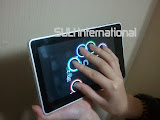
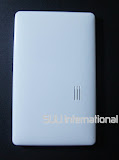
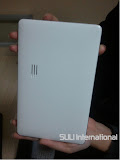
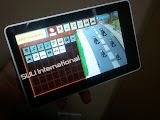
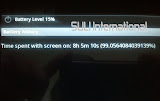
Here’s an exclusive unveiling for an upcoming new Android tablet design made by Suli International Co., Ltd. It’s a nice combination of the new higher performance Rockchip RK2818 (ARM9 600mhz + 550mhz new high performance DSP) with Glass type 7″ Capacitive multi-touch touch screen. It supports 3G USB dongles on the USB host connector. Plays back mp4 and rmvb video at up to 1280×720 (bitrates/high profiles not yet confirmed). The Rockchip RK2818 improves web browsing from RK2808. At $249 this one is thus positionned $150 cheaper than the ARM11 Qualcomm MSM7227 3G-enabled Foxconn 7″ Tablet (also known among other brands as Viewpad 7).
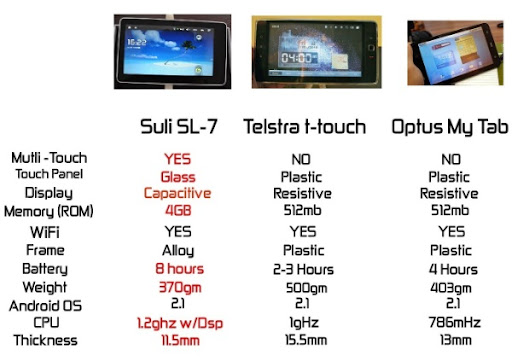
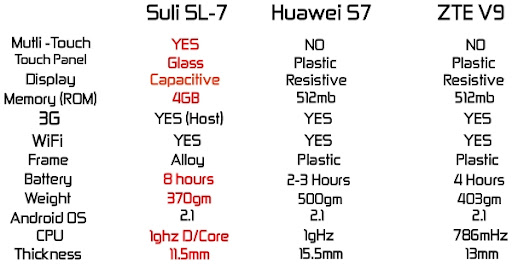
(comparison graphics provided by Suli International)
Suli International also says they have a 8″ capacitive Android tablet coming in 2 weeks using either the Amlogic or the next generation ARM Cortex-A8 based Rockchip RK29 design!
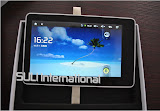
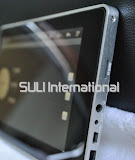
Here are some pictures of the Suli SL-7 tablet:





Full specs: