Here’s the press release:
SANTA CLARA, Calif. – July 26, 2012 – Neonode Inc., (NASDAQ:NEON), the MultiSensing touch technology company, announced today a licensing agreement with One Laptop Per Child (OLPC), a non-profit organization that designs, manufactures, and distributes laptops to children worldwide, to embed Neonode’s MultiSensing
touch technology into the next generation of OLPC’s XO-1.75 laptop, called the XO Touch. The innovative OLPC XO Touch 1.75 is a 7.5” combined laptop and tablet that has a Dual-Mode (sunlight-readable) TFT LCD display which rotates 180 degrees and folds flat over the keyboard for tablet/e-book or game mode.
Embedding the Neonode MultiSensing touch solution will allow OLPC to build a completely new type of rugged laptop-tablet that is extremely fast, cost efficient and energy saving, offering 100% visibility in bright sunlight. This is done without compromising the quality of the first-rate user experience, in full color, and with the highest resolution possible, i.e., 300 dpi. The Neonode MultiSensing technology consists of a state-of-the-art interactive touch user interface that includes gestures, multi-touch, and sweeps at an extraordinary scanning speed of 1000 Hz. Thanks to the energy efficient engineering, consuming just 2W, the XO Touch can be powered through alternative power generators like solar cells or even hand cranks. In addition, Neonode’s green engineering feature AlwaysON
OLPC, created by faculty members from the MIT Media Lab, sells the laptops in large quantities to governments and private institutions around the world, that in turn issue them to children or schools on a basis of one laptop per child.
“We are honored to be collaborating with OLPC to produce the XO Touch, a truly pioneering and sustainable device that shows the broad versatility of our technology. This market entry confirms that our MultiSensing technology makes it possible to create a top class product that is both affordable and extremely energy saving and still has a user interface that is radical enough to satisfy the uncompromising demands of knowledge and entertainment thirsty children” says Thomas Eriksson, CEO Neonode. “Our company philosophy is to contribute to a better and happier world, and we have the opportunity to do so by supporting OLPC’s mission”
“OLPC is proud to partner with an organization that shares its appreciation for innovative and transformative technology. Neonode’s expertise in engineering and design will turn the XO Touch, which combines the best features of laptop and tablet, into a next-level innovative machine.” said Rodrigo Arboleda Halaby Chairman and Chief Executive Officer at OLPC
See how awesome Neonode’s touch-screen technology looks outdoors in sunlight on a Pixel Qi tablet in this video I filmed in May 2011:
Here’s my video filmed with Neonode last February:
Related articles
- OLPC XO Touch 1.75 to use Neonode tech, take multi-touch on world tour (engadget.com)
- OLPC partners with Neonode for XO Touch (slashgear.com)
- Neonode to bring multi-touch tech to OLPC’s XO Touch (electronista.com)
- Neonode Signs License Agreement with One Laptop Per Child (virtual-strategy.com)


My opinion and suggestion for Google:
I’d like to see Google invest heavily in Pixel Qi for a 7″ 1024×600 screen to be mass produced for the rumored upcoming Nexus Tablet, providing it 20 hours battery life on an ultra slim form factor, with a very small bezel if they can make it have a plastics based screen, suitable for reading Google Books, suitable for outdoor use. Google should invest the money needed in bringing Pixel Qi to the mass consumer market. And then also Google can help bring the 2048×1536 9.7″ Pixel Qi screen to the mass Android tablet market.
The success of the iPhone and iPad is due to ARM Technology, but also to the investments Apple has made in using new screen technologies, Apple basically financed exclusivity for the 3.5″ capacitive screen when launching the iPhone and they bought an exclusive on the 9.7″ IPS screen for the iPad. Now also Apple invested the $2+ Billion getting an exclusive on the 9.7″ Retina screen. Google should do the same, not only invest heavily to optimize Android on all the ARM Processors, Google should also invest the money needed in new screen technologies such as Pixel Qi LCD and use that for their “Google Hardware” Nexus devices but then also instantly allow access to the new screen technologies to every other Android hardware maker.
Source: pixelqi.com/blog1
Related articles
- Pixel Qi teases ultra-frugal Retina Display rival (slashgear.com)
- Pixel Qi: our new screen better, lower-power than new iPad (electronista.com)
- Pixel Qi promises retina-quality low power displays (liliputing.com)
- Next generation Pixel Qi screen said to have Retina display-like resolution, significant power savings (theverge.com)
- Pixel Qi promises tablet displays that meet iPad 3 quality – and draw much less power (venturebeat.com)
- Pixel Qi Says Next-Gen Displays Meet or Beat iPad 3 Screen Quality (hardware.slashdot.org)

[s2If !is_user_logged_in()]
| Logged-in Members of ARMdevices.net ($50/year) can see the full contact information for this company from the business card here. Become a Member Now! |
[s2If is_user_logged_in()]

 [/s2If]
]]> DSP, up to 1GB DDR2, up to 16GB eMMc Flash, the Pixel Qi LCD screen is the 7″ 1024×600 built using a chemically strengthened resistive touch screen layer (I wonder how readable this resistive Pixel Qi implementation is). Having been tested through the military specs MIL-SPEC, MIL-STD-810G, MIL-STD-461F it can support extreme temperature, fluid contaminates, solar radiation, fungus, immersion, shock and vibration. It uses a 37WHr redundant 3.7V Lithium Polymer battery for up to 10 hours of battery life. It can run Android 2.3, Ubuntu 10.10 and Windows Embedded Compact 6.
[/s2If]
]]> DSP, up to 1GB DDR2, up to 16GB eMMc Flash, the Pixel Qi LCD screen is the 7″ 1024×600 built using a chemically strengthened resistive touch screen layer (I wonder how readable this resistive Pixel Qi implementation is). Having been tested through the military specs MIL-SPEC, MIL-STD-810G, MIL-STD-461F it can support extreme temperature, fluid contaminates, solar radiation, fungus, immersion, shock and vibration. It uses a 37WHr redundant 3.7V Lithium Polymer battery for up to 10 hours of battery life. It can run Android 2.3, Ubuntu 10.10 and Windows Embedded Compact 6.

This tablet seems to compete with the Orchard Inc Toughlet which is also a ruggedized 7″ Pixel Qi tablet for military and industrial use. The military and the industry must be very eager to use the Pixel Qi screen for tablets outdoor readability, low power consumption as soon as possible.
Read more about this new Pixel Qi tablet at: inhand.com
Source: InHand press release
Found via: netbooknews.com
]]>List of devices featured in this video:
– Headmounted Display: Kopin Golden-i, OMAP3530 based, provides SVGA screen at eye-level for real-time monitoring of an IRC chat for asking better questions
– Headmounted Logitech c910 Webcam connected to the ARM Powered One Laptop Per Child XO-1.75, Marvell Armada 618 based, live-streaming the webcam video feed to http://ustream.tv (an optimal Headmounted computer, maybe Motorola’s next version, can include the webcam and Android based software to live-stream the video to any live video streaming service built-in)
– Archos 101 G9, OMAP4430/OMAP4460 1Ghz to 1.5Ghz tablet, similar specs as in the Galaxy Nexus but in a 10.1″ tablet form factor. Starts $269 unlocked no contract for 8″. This is probably my favorite high-end tablet at the moment. I’ll post my full video-review of the Archos 101 G9 in the next few days.
– Archos 70 Internet Tablet, OMAP3630 1Ghz single core, released about 13 months ago. I use this tablet every day as 7″ tablets fit in any jacket pocket. Thus I mostly use this for checking emails, web browsing, watching video, playing games, using apps when I am outside. I am looking forward to upgrade this to a dual-core 7″ tablet.
– My $87 FG8 Android Smartphone, it’s my main smartphone for the past 7 months since I found it in Shenzhen China. It supports Dual-SIM cards (so I can use my home and foreign SIM numbers at the same time, or use voice SIM and data SIM at the same time), has a decent 3.5″ capacitive touch screen, uses the wildly popular in China Mediatek MTK6516 ARM9 processor. I’m looking forward upgrading this to a Galaxy Nexus (because I am eager to try Ice Cream Sandwich) or to a newer faster 3G-capable sub-$100 Android phone.
– ZTE MF61 T-Mobile USA 4G HSPA+ Hotspot, $50 for 3GB/month pre-paid, $141 for the device, no contract.
3M is the leading developer of innovative optical films for LCDs, probably the world’s largest. Together with Pixel Qi, they are capable of many interesting things. This should accelerate the availability of this screen technology to the mass market. First generation Pixel Qi screens are in over 3 million OLPC laptops being used by kids in the developing world, and Pixel Qi is ramping up deliveries of some of their latest screens to Chinese companies such as ShiZhu Technology and we should be seeing much more of that, hopefully also soon reaching the European and the US mass consumer market.
ST. PAUL, Minn. & SAN BRUNO, Calif. & TAIPEI, Taiwan, Sep 12, 2011 (BUSINESS WIRE) — 3M, through its 3M New Ventures organization, has invested in Pixel Qi Corp., a developer of next generation LCD panels with operations in Taiwan and California. Terms of the transaction were not disclosed.
Founded by LCD pioneer, Dr. Mary Lou Jepsen in 2008, Pixel Qi designs unique, innovative LCD screens that solve problems not addressed by conventional screens. Its first products are sunlight-readable, low-power LCD panels aimed for mobile device applications.
As consumers increasingly rely on connected, mobile devices in their daily lives, there is a growing, unmet requirement for display devices that offer portability, connectivity, long battery life and excellent indoor/outdoor readability in one device. Current displays are not able to solve all of these challenges simultaneously. Pixel Qi’s unique technology platform eliminates the need for trade-offs and enables high quality, outdoor or sunlight viewing with excellent battery life and portability in one device. The combination of its technologies with those of 3M will create excellent new opportunities for both companies.
“Pixel Qi’s full-function color screen technology, for the first time, gives consumers an outdoor-readable video display with exceptional battery life, usable anywhere, anytime. It’s a first in the industry. In our collaboration with 3M, we have the ability to accelerate this into mass adoption,” said Mary Lou Jepsen, co-founder and CEO of Pixel Qi.
The funding led by 3M New Ventures will play a key role in enabling Pixel Qi to develop its product offerings into volume consumer markets as well as digital signage and touch applications. The investment, which successfully concludes Pixel Qi’s second (series “B”) investment round, will also allow Pixel Qi to build and to strengthen its engineering and sales capabilities.
Stefan Gabriel, president of 3M New Ventures said, “Pixel Qi’s technology enables displays of such lower power and high usability that the vision of ubiquitous displays comes much closer to realization. In combining Pixel Qi’s disruptive display technology with our technology platforms, we can create new business opportunities in the consumer and commercial markets for 3M.”
3M’s Optical Systems Division is a world leader in the specialized films used inside liquid crystal displays to optimize the light throughput. Pixel Qi’s innovative LCD designs use such film technologies, and other advances, to create novel displays and enable the best outdoor readable, power efficient displays available on the market. “By addressing the energy consumption and sunlight readability challenges in one package, Pixel Qi provides a ground-breaking solution for the next generation of displays,” said Jim Bauman, vice president, 3M Optical Systems Division. “The combination of Pixel Qi’s low energy, reflective display technology with 3M’s innovative technologies will create exciting products for the mobile, handheld, tablet and other display markets.”
Source: http://www.marketwatch.com/story/3m-invests-in-pixel-qi-corp-2011-09-12
]]>Also watch: John Ryan COO of Pixel Qi and John Watlington Vice President of Hardware Engineering at OLPC
You have to consider, while it has been 23 months ago that I published my first Pixel Qi interviews from Taiwan (2), (3), (4), (5), (6), (7), (8), (9), (10), (11), (12), (13), (14) while that might sound like a long time, in the display industry, 2 years is peanuts. Things move rather slowly there. Since then, there has been an economic crisis and a sort of re-focus from netbooks to tablets, although netbooks have sold more than 100 million units in 3 years, the display investments are focused on tablets. The display business can be considered to be the worlds biggest non-profit industry, the 5 biggest LCD makers who produce 90% of the worlds LCDs, produce for $120 Billion in screens every year but can only make small profit margins out of that because of the strong competition and the large volumes shipped. Those companies that produce the worlds LCD screens have very high costs, very high risks, little flexibility. Let’s hope Pixel Qi has amply well convinced the big LCD makers like Quanta, CPT, Chi Mei, Samsung, LG, Sharp, Sony, Foxconn, let’s hope that they have all signed with Pixel Qi and that they are all right now in the process of tuning the mass manufacture of millions of these screens for all the worlds upcoming Chrome OS notebooks, ARM Powered Macbooks, Kindle4s, iPad3s, a solution for using the interactive UIs of Android on all the worlds e-readers. It would also be nice to double the battery runtime and improve outdoor readability on all the worlds Smartphones using Pixel Qi.
]]>1. Make White Spaces happen. Things are moving far too slowly. I want to see White Spaces deployed to provide free wireless broadband to the whole world as an alternative to the proprietary 3G/4G/LTE networks. It should be deployed using the FON.com model, Google can invest meager $50 million or whatever is necessary to mass produce the first 1 million routers to activate White Spaces sharing all over the world. The idea should be this, users get these routers that may initially cost $50 to manufacture because the White Spaces chipset is new, but could eventually cost below $20 per router. They install it in their homes, connected to whatever ADSL, Cable, Fiber that people already have in the home. This router creates a White Spaces hotspot that reaches much further than within their home, to cover their whole neighborhood with bandwidth. The router is clever in that it can dynamically throttle bandwidth, if you are at home and you need to use your own bandwidth your bandwidth is 100% prioritized for you to use, thus it does not feel at all like you are sharing your bandwidth, that bandwidth sharing is only of the bandwidth which you don’t need yourself. The whole global network uses OpenID and such with increased level of verification of every users real ID, to authenticate each user on that network, so this is not used as an untraceable anonymous global Internet access, but where any illegal activity could be traced back by local authorities if needed (obviously, proxies and encryption can always be used if someone really wants to be anonymous).
Listen to Larry Page talk about White Spaces, this is more than 2 years ago. What has happened since?
2. Open Google Marketplace to all devices. If there is one point where I think Google might be evil, it’s in their policies to hamper innovation with Android. It’s been about a year and a half that Archos has put Android tablets on the market, still they are not allowed by Google to install the full Google Marketplace on the device. Google needs to stop now. Open several versions of the Google Marketplace if they want, for different types of devices. Or basically just add a settings menu in Google Marketplace that allows apps to be filtered and highlighted differently in terms of how they have been tested (mostly by users themselves) to work better or worse on every different type of device. Allow in those settings for the user or device to present itself automatically for example “without 3G”, “without compass”, “without back camera”, “without android buttons”, “at this specific screen resolution”, then filter apps from there, but never block access to all apps on all devices, if some apps don’t work correctly on certain class of devices, so be it. I believe 99% of the 200’000 apps in the Google Marketplace work 100% just fine on about 100% of the cheapest Android tablets on the market.
I understand that Honeycomb should be opening up Marketplace for more devices. For tablets it’s kind of a certain. But still, will Google allow even the cheapest ARM9 Tablets full access to Honeycomb OS and Marketplace? Honeycomb for Laptops is a possibility. Honeycomb for e-ink e-readers, maybe.
In any case, it’s kind of sad that it took Google more than 2 years to open up Google Marketplace for more devices. This has let Apple all alone in the market of iPad and iPod Touch.
3. Campaign for Net Neutrality on wireless networks for VOIP access. There has been a lot of rage on the blogosphere about Google’s partnership with Verizon in the USA leading up to a Net Neutrality proposal that exempted wireless networks.
It is understandable that bandwidth on wireless networks such as 3G, 4G and LTE have to be managed because it only takes a few users to download some BitTorrents at full speed on one base station for a whole area of up to 1km in diameter where users might experience dropped calls and the like. As far as I understand, even for LTE, bandwidth is limited, although it could be argued that carriers should then just build more base stations closer to users, if they do spend significant money to expand their networks or not, it’s understandable that wireless networks need to be throttled somehow.
But, that should absolutely not allow carriers to block voice-over-IP usage. That is pure evil. Wireless bandwidth shall be used HOWEVER the user wants to use it. If carriers don’t like the idea of becoming dumb pipes of data, that is their problem. They should have considered that possibility when they decided to become carriers.
Carriers have made enough trillions of dollars of profit already, not for them to justify that they should be allowed to continue to gouge the consumer of thousands of dollars per year in completely data bandwidth prices. When you consider the price of 1MB of SMS messages sent costs about $10’000 to the consumer. We are in the year 2011, 1MB of wireless data SHALL NOT cost $10’000 to the consumer.
4. Destroy Facebook, Twitter, Groupon, Foursquare and other over-hyped social networks and location based services. This is a call from a user who gets tired of these boring, unoptimized, wastefull, meaningless excuses for social networking and location based services. What a waste of time! Google has to fix this now!
Twitter only benefits famous people. That’s why they keep talking about it. For 99% of users, twitter is absolutely useless, for anything else than to follow whichever famous person you like following, in lists of garbled, meaningless, unoptimized, spammy, messy 140-character messages. Make it stop, please.
Facebook is the newer type of Myspace that is a trend in high schools globally. It’s for not much more than grouping school kids together and have them waste time on farmville, a tool for massive stalking of a bunch of people you never spoke to for 10 years or more. Make it stop, please.
Social networking will be extremely useful eventually. Location based services will revolutionize everything that we do. Just not in those forms. Google needs to make a social network with location services in a way that absolutely makes sense. Make it so people get to do constructive things in the world, people move more, do more things, people get to be more productive, meet more people. End the global era of wasted opportunities, wasted efforts, mutual disdain, rejection and loneliness that can be felt by everyone.
Social networking that makes sense changes organizations, it changes companies, it changes communities, it changes countries. It auto-regulates humans use of global resources and actually makes democracy work.
Yeah those may be high hopes for Google’s social network, but who else than a company of the worlds top 24 thousand Phd software engineers can we rely upon to make this work?
5. Merge Android, Chrome OS and Google TV into one ARM Powered software platform. Google needs to focus on bringing the full Chrome browser on top of Android, provide it with full Google TV features, make it all boot on one ultra optimized ARM Powered software OS image. Read my previous post “Recipe for the ultimate ARM Powered device” for more on how this all-in-one software should work.
6. Bring Internet access to the next billion people faster. It’s all good how Android is taking over the smartphone market. It eventually does bring cheaper Android devices mostly made by Chinese vendors themselves. Still it is not going fast enough. Google should make it a priority that a $50 Unlocked Android Phones shall become available globally. Google should invest billions of dollars in One Laptop Per Child, have it run open source software that is supported by millions of people. Reaching the $75 Tablet should be a priority. Invest billions of dollars in Pixel Qi to mass produce their screens as fast as possible, make sure all devices can last 10 times longer on a battery as soon as possible.
The thing is western countries have a lot of electrical power so they don’t care enough about not having to recharge a 2300mAh battery every night. Consumers in wester countries don’t care enough about the price of the smartphone as most are still buying smartphones subsidized by a carrier who charges upwards $3000 in 2-year contracts that for example most Americans feel are natural thing to sign up for when getting a smartphone.
Getting mobile computing to the next billion people within 2-3 years should be a priority for Google, and if that risks to disrupt the actual business models of the carriers in developed countries by the availability of $50 unlocked Super Phones, $75 Tablet/E-readers and $100 Laptops in every super market, so be it.
7. Monetize independent web video production and make VOD the worldwide standard through YouTube and Google TV. YouTube has already become the worlds largest bandwidth infrastructure, streaming out more than 2 billion video streams per day, hosting and encoding all the worlds video, it’s impressive. Yet, Google now has the opportunity to reach much further and completely monetize YouTube. The YouTube Partnership system is a drop in the bucket compared to what they should do. I’m not allowed to become a YouTube Partner even though I have over 12 million video views (including what I put on other channels and what I had put on Google Video), the reason being Google only allowes residents of G20 countries access to even apply to become a YouTube Partner.
Of those that are conservatively monetizing YouTube video views with overlay advertising, they could do so much more. Why not provide a one-click donation button under every video, on every channel page to allow viewers to sponsor the future productions of their favorite content creators? Why not embed price comparison links with commission payments on one-click sales under every video that talks about a product that can be bought by interested viewers? Why doesn’t Google provide a global subscription plan à la Hulu, but where it gives access to much more than just established Hollywood/TV contents, but where it also monetizes ads-free or higher definition viewing of all independent content? Why doesn’t YouTube offer pay-per-view solutions worldwide, for example, let viewers choose to pay very small amount of money to get a direct link to download any of the videos as an uncompressed video file or on-demand encoded to chosen codec and bitrate/resolutions?
YouTube needs to become much more than the worlds biggest bandwidth infrastructure project. YouTube has to become Google’s biggest source of revenues and profits. It needs to become a tool that changes media and ultimately that improves democracy.
What do you think Google should do now that they have a new CEO? Post in the comments.
]]>India’s Minister of HRD, Shri Kapil Sibal, or one of his colleagues, watched my video.
On July 22nd 2010, the Government of India’s Ministry of Human Resources Development announces the $35 Tablet, announces they plan to have a Chinese manufacturer deliver a few million of these in India for education.
I would like to be serious a bit, as there are literally billions of children on this planet who are waiting for tools for a better education, they are growing old with a missed opportunity to learn. I don’t have anything against Governments watching my video-blog to find out what are the best ARM Powered devices on the market, but I would like to suggest a few more things they can do if they would like the project to be successful all the way:
1. Don’t work against OLPC, announce you want to join their efforts. Doesn’t mean you use OLPC’s Marvell 610 platform, just means you share all knowledge and collaborate towards a same goal. You are supportive of each others goals, this is not a competition, this should be a collaboration.
2. Turning a tablet into a successful educational tool is not a piece of cake. It’s probably not enough to just take whatever cheapest materials and deliver it like that.
3. Denounce Intel’s blatant corruption attempt, 4 days after the announcement of the $35 ARM Powered Android Tablet project, Intel India is quick to suggest the Government should rather (basically give up on the ARM Powered Tablet) and just use the “Donation of 1500 Intel powered tablets” for pilot project (to last a couple years or so preferably, enough time to delay all other real mass low cost deployment attempts), same thing Intel did all over the world to block OLPC from reaching developing countries. Intel has subsidiaries all over the world, they may not be instructed centrally by Paul Otellini for all it does all over the world, but they seize any opportunity at preventing other potentially disruptive technologies from catching on. I mean seriously, what could Intel seriously want to do helping a project to make a $35 ARM Powered tablet for education running Android? Intel can afford to buy India a couple million of these ARM Powered tablets to help get things started, but is that anything near what they had as intention?
4. If you are a Governmental Non-profit project, you setup a Website, open source the code, informations about potential suppliers (real-time information about manufacturing requirements). Tell me in the comments if India’s HRD has been open about this project, I haven’t seen it. If they chose to make their project secret, it would have a harder time to get implemented. Be open about the full Bill of Material. If you listen to my video, you can hear the AllGo Systems representative list these Bill of Materials:
ARM9 Processor: $5 (Freescale i.MX233)
Memory: $3
WiFi B/G: $4
Other discrete components: $3
Battery: $5
7″ 800×480 resistive touch screen: $15
Total bill of material: $35
If this is it, then clearly publicly say this is it. Let people know what alternatives there may be, let the community discuss what alternatives could be used.
For example, I am pretty sure an educational tablet cannot be made without a 7″ Pixel Qi screen. For one it’s the only way to hope it has low enough power consumption to last long enough for children in India who don’t have a lot of power, perhaps no power at all (let it be powered by Bicycles, hand crank, sub-$5 A4 sized solar panels..). A reflective screen is the only way the tablet can be used for reading ebooks, the only way it can be used outdoors during the day in places where a child might not even have a roof on the school or no school at all.
5. The Bill of Material should be calculated openly with the prospect of using that budget that you have for it. Meaning if you can produce 1 million units, that obviously affects the price of each Pixel Qi 7″ screens, perhaps making it as cheap as a normal LCD screen.
6. Be open with how you plan to finance the project. This whole deal with the Chinese manufacturer not wanting to pay HRD $13 Million just sounds weird. Why should the manufacturer pay India and not the other way? Usually, as far as I know, a manufacturer would be paid on shipping of completed product, and India’s engineers can work at the factory to monitor yield, quality and batches before mass production is started and while they are being mass manufactured.
7. Be open about how it is designed. The reports (2) on this tablet being a copy of some Chinese design may be true for the casing, but that does not mean that the cheap Freescale i.MX233 ARM9 based SoC on Motherboard, electronics, Android software porting to that specific ARM9 processor (perhaps one of the cheapest ARM SoC in the world), all that does not mean AllGo Systems didn’t actually do this original work. I believe they have. The fact is the Chinese market, Chinese manufacturers have so-called Open and Free designs for those cases that can be used for cheap ARM Powered Tablets, cheap ARM Powered laptops, cheap ARM Powered e-readers. But that does NOT mean that what is inside is always a “clone” of some other design. OEM’s might have turn key solutions, all ready made designs that they produce and deliver low cost, but they also produce the designs of foreign companies.
Related articles
- India’s $35 Tablet Loses Primary Contractor, Could Face Delays (slashgear.com)
- The $35 Indian Tablet Delayed, Possibly Up For A Vaporware Award (crunchgear.com)
- The $35 Tablet: Toast? (technologizer.com)
- India’s $35 Android tablet apparently vaporous after all (teleread.com)

As Pixel Qi provides 3x higher resolution in reflective black and white mode, that should basically serve the marketing tag line of a pixel density that is “Retina display”.
iPad is very heavy at 680 grams. They could significantly reduce the battery weight using a lower power Pixel Qi display, thus saving on the weight of the whole device.
At CES 2011, Pixel Qi announced that they have a manufacturing partner making 9.7″ Pixel Qi screen. If that means Apple may be using it, and if Apple only wants to work with LG to make their iPad2 screen, that could mean that the new manufacturing partner would in fact be LG, and that would mean Pixel Qi may have reached out of Taiwan into South Korea as well.
Some bloggers complain about the quality of colors on Pixel Qi screens, describing them to be “washed out”. I didn’t ask Pixel Qi about their color mode quality, but I believe this is only because the screen coating is anti-glare Matte type which is the only correct way to use this screen 100% outdoors and for e-reading. While iPad1 and most other devices use Glossy type screen those have lots of glare and reflections when used outdoors.
Apple has the opportunity to make of Pixel Qi a mass market screen technology, they have the opportunity to use it for allowing their customers true use reading e-books without the eye straining of a back light, they have an opportunity to launch an iPad2 with 20 hours or longer battery runtime and a significantly thinner design and lower weight.
But if they decide not to, it wouldn’t be the first time Apple disappoint. Then Android Tablet makers will have that opportunity but uptake of the technology may not be as fast especially if Apple’s marketing continue to make it sound ok for e-reading and mobile computing use to have a regular backlit LCD that is unreadable for ebooks and unusable outdoors.
]]>Watch my video of prototype Liquavista screens filmed outdoors:
Related articles
- Samsung Electronics Buys Dutch Display Company (online.wsj.com)
- Samsung buys Liquavista, dives headfirst into electrowetting displays (engadget.com)
- Samsung acquires e-paper technology firm Liquavista (reuters.com)
- Samsung snaps up Liquavista for outdoor-ready displays (electronista.com)
- Samsung’s Liquavista buy-out official: color video e-paper and more in pipeline (slashgear.com)

Here is the top-20 best products that I filmed at CES 2011
1. Motorola Atrix 4G, this is the direction for this industry, convergence in the area of Mobile Computing.
2. Exclusive Honeycomb UI hands-on (not just video of the UI), I actually clicked through the reference Honeycomb OS UI for about a minute in that video while the Motorola representative was looking the other way. Anyone else posted a similar actual Honeycomb UI video and not just pre-recorded video?
3. ARM Powered OLPC XO-1.75 laptop, One Laptop Per Child already invented the Netbook market, now they are pushing the Netbook/Laptop industry into becoming ARM Powered to lower power consumption, lower complexity and lower cost. They are nicely using the high-end Marvell Armada 610 processor for full laptop performance.
4. Archos 101 Home Tablet, Rockchip is pretty amazing, they came from nowhere a year ago (as far as I knew), and now they are powering over 50 Android tablets at CES. This Archos 101 Home Tablet could be sold for as low as $199-$249 at retail when it comes out in a couple months (depends if you listen to what Rockchip or Archos says), it’s 10.1″ capacitive touch screen, HDMI output and very compact and light form factor, it comes with Rockchip’s new RK2918 ARM Cortex-A8 1Ghz processor which they claim is more powerful than Hummingbird/Apple A4, does 1080p playback, and most importantly, they say, allows for more affordable ARM Powered devices. And Rockchip is expanding into Laptops and Set-top-boxes as well, where they likely will provide their knowledge and experience providing an all-in-one turn-key-solution for cheap Chrome OS on ARM and Google TV on ARM solutions, to be provided by all the cheap Chinese manufacturer, possibly starting at CeBIT in March, or by China Sourcing fair in April, or Computex in June and beyond.
5. Pixel Qi shows 7″ and announces 9.7″ and 10.1″ 1280×800, these announcements hopefully give us a clue as to we soon may see mass produced devices like Kindle 4 or iPad 2 use this screen technology, and not only the nice Notion Ink tablet which may be reaching some few consumers now but not in large enough scales to fund mass manufacturing and real mass adoption of this new type of screen.
6. LG Optimus black, amazingly light 109gr OMAP3630 Android Super Phone (same power as Droid X) and also uses LG’s new NOVA super bright 700nit display.
7. Sony-Ericsson Xperia Arc, they dominated the Japanese 2010 smartphone sales, now Sony-Ericsson wants to dominate worldwide smartphone sales. The Xperia Arc is also extremely light at 117gr and uses Sony’s big push into mobile displays, their new Bravia LCD display. I wish they would allow for easy one-click Home replacement to become fully 100% Vanilla UI like on a Nexus S.
8. Windows on ARM, there were no booth demos yet, but the excitement at Steve Ballmer’s keynote was insane, this is the end of an era called Wintel.
9. Acer Iconia Tab A500 Tegra2 Tablet, seems to me Acer is showing one of the best looking new major Nvidia Tegra2 based Android Honeycomb tablets.
10. Innodigital shows ARM Cortex-A8 (Samsung) and ARM Cortex-A9 (Amlogic) Android based Set-top-boxes, the ARM Cortex-A8 is already on the market at $168 and the A9 one will come within a couple months for around $268. Those could run Google TV for ARM when that becomes available. Those are the best performing ARM Powered Android set-top-boxes I have seen yet.
11. Joyplus, Pierre Cardin showed Samsung ARM Cortex-A8 7″ Capacitive low cost tablets. Those pretty much can perform like a Samsung Galaxy Tab, basically run the same Samsung Hummingbird ARM Cortex-A8 processor with 1080p video playback (I don’t know what bitrate/codec complexity limitations it has), but instead of costing over $600, these are to be sold in bulk at $150 and possibly retail a bit over $200, depending on screen quality.
12. Shenzhen ACT 4.8″ capacitive Marvel PXA935 clamshell Android, really nice 4.8″ capacitive Android Tablet using a Marvell processor and dual-sim card slots in a clamshell form factor with keyboard.
13. NEC LT-W Android Dual-Screen Tablet, it’s actually pretty cool to see such dual-screen Android tablet concept. Although text input is too slow, it probably still needs a real external keyboard solution for full speed text entry.
14. NEC Tegra2 Powered 7″ Laptop, there’s a 7″ capacitive Tegra2 with full keyboard Tablet/Laptop combination prototype. I’d like to see such form factor in a jacket pocketable size.
15. Ramos ARM Cortex-A9 Tablets, Ramos is famous in making cheap PMPs and are now launching Amlogic based ARM Cortex-A9 Android tablets. I also filmed Nufront’s ARM Cortex-A9 10″ and 14″ Laptops and Tablets.
16. Polaroid, Yifang, Pierre Cardin, Match Tech, Yootechpros all presented 9.7″ Android Tablets, now Apple’s exclusivity on the screen is finished. Now all Android tablet manufacturers may use the exact same LG IPS capacitive touch screen as used in the iPad.
17. Freescale i.MX508, next generation platform for e-ink e-readers, shows 8fps fast e-ink refresh rates, Android user interfaces for e-ink e-readers. This processor platform will probably be in a large part of the future e-ink e-readers.
18. RIM Blackberry Playbook, most awesome thing about this demo is to experience the power of Texas Instruments OMAP4430 ARM Cortex-A9 processor, see how nicely QNX’s embedded Linux OS does multi-tasking. This specific tablet seems to be pretty great, uses a new bezel touch sensitive user experience, but that also increases the size of the bezel.
19. Seco srl’s Pico Projector in a Lamp concept, watch this one, it’s really fun. This concept could turn out to be in many lamps, adding pico projectors onto every wall, displaying informations and changing moods in your room. Texas Instrument’s new nHD Pico Projector is so small, so low cost, uses so little power, we may see it in many if not in all ARM Powered devices soon, in all mobile phones, all tablets, all cameras such as the GE PJ1. I especially am looking forward to the user interface of turning any pocketable device into a large screen computer projecting the desktop onto any table and having multi-touch sensors built-in.
20. Nvidia’s announcement of Project Denver, they are making a super high performance ARM Processor not only for super phones, super laptops but also for super computers. This may be Nvidia’s custom ARM Processor design or ARM Cortex-A15 based design. Get more infos from my interview with Mike Rayfield on this subject.
Find more of my top CES videos in my Top-24 videos filmed at CES of products not covered by Engadget.
]]>The Motorola Atrix 4G gives us a taste of what’s coming. You get one pocketable product, that is, up to 5″ for normal pocket (passport sized), and up to 7″ for jacket pocket (you’ll see, almost every jacket comes with such a pocket), for this summer I think up to 5″ is the more likely size but for next Christmas sales the 7″ size may win, that device runs full speed Android no slow downs, and when docked to Desktop/HDTV Dock it outputs either Chrome OS for productivity or Google TV for entertainment depending on which mode the user wants to use, and also have this solution power the laptop dock.
Ultimate Pricing
– The ARM Powered brains, basically modular Android Tablet should not cost more than $200 at retail this year. Might add $50 for built-in 3G/4G modem. White Space support this year would be good if built in the FON.com model. If someone could miniaturize a reliable swappable and optional 3G/4G/White Space modem module that could be slided into the back of the device, including easily accessible SIM card reader in there, that could be nice. This way the same product is sold worldwide and the unlocked cellular modem would be an optional accessory that could be purchased for $50 separately.
– Desktop/HDTV Dock should be no more than $50. It’s just a bunch of connectors. Full Google TV support could also include HDMI input and IR Blaster in that Dock, as well as the multimedia RF remote. Ports should include at least 3x USB host, 1x HDMI, 1x mini jack input, 1x mini-jack output, 1x optical audio output.
– Laptop Dock should be no more than $100, include super good quality 10.1″ Pixel Qi screen, capacitive touch, so this also turns this into a 10.1″ Tablet.
Fast enough ARM Processors to do it all-in-one.
The ARM Cortex-A9 powering this device should have fast enough memory bandwidth, fast enough I/O, built in a way that it is fully fast enough to run dozens of tabs at the same time in Chrome OS mode, the overlaying features of Google TV mode should have to support full dual-view with overlays when using HDMI pass-through and support all codecs at fully highest bitrates and highest profiles 1080p 60 frames per second.
This may mean that the current Tegra2 in Motorola Atrix 4G may not be fast enough, but that this ultimate product may need to use the upcoming Texas Instruments OMAP4430 (as in Blackberry Playbook), Qualcomm Dual-Core MSM8660 Snapdragon (as in Asus Memo), Samsung Orion (as potentially in Samsung Galaxy S2/Tab2) and let’s see/analyse performance and availability of the upcoming Freescale i.MX6, Marvell Tricore, Nvidia Tegra3. Someone knows how Amlogic’s ARM Cortex-A9, Nufront’s ARM Cortex-A9 and others may perform comparatively? I’m looking forward to post or find web browsing, video playback, battery runtime and pricing benchmarks testings to be done comparing the performance of all these next generation ARM Processor platforms.
Waiting for Google’s software
The main problem for a platform maker at this point, is that Google has not yet released Honeycomb source code, not yet released Chrome OS for ARM, not yet released Google TV for ARM, thus a gadget maker not having real-time access to Google’s software R&D offices, would have to anticipate this evolution and prepare an all-in-one tablet/smartphone solution that would be compatible with integration of these multi-booting software convergence solutions once Google releases them within the next few months. I don’t know for sure how such Atrix 4G like solution would have to work, if each of the Android, Chrome OS and Google TV have to boot all at the same time offering instant swapping between one or the other OS in the user interfaces, or if all 3 of these OS have to be merged somehow first for this to work in an optimal way. Please post in the comments if you know how Motorola does it on Atrix 4G and how this using Android+Chrome+GTV has to work.
My favorite size would be the tablet using the 7″ Pixel Qi screen, allowing for smaller battery thus 200grams super light weight and thin form factor, the laptop dock should somehow allow for the tablet to be docked on the side of the 10.1″, 11.6″ or larger screen, thus actually extending the screen surface, you can thus touch the tablet part and work on the laptop screen. Basically the Laptop Dock could be like shown by Motorola where the pocketable tablet is either behind the laptop screen, but should be with a swivel to be positionned upright next to the laptop screen. Thus this device combines Tablet, E-reader, Mobile Phone, Laptop and Set-top-box functionality all into one.
Non-free, non-open-source alternatives to Android+Chrome+GTV? Fine.
– Someone in the industry thinks they can do it better than Android? Fine. They can try to put RIM’s Playbook OS, HP’s WebOS, Apple’s iOS, Microsoft’s WP7 or Nokia’s Meego on there if they think that is better or they feel they need to differentiate.
– Someone in the industry thinks another browser than Chrome is better? Fine. Like Motorola does Atrix 4G for now with Mozilla Firefox, Opera might have another browser solution, there’s Webkit, IE. All that matters is we get a full speed full resolution ARM Powered web browsing experience with flash and support for all HTML5 web standards including offline web apps, the Native Code and WebGL stuff coming out.
– Someone in the industry think they can do better than Google TV on ARM? Fine. They can load another media player UI on there if they want. Just make sure the user can sit back on a sofa, use a full sized RF keyboard on the USB host, and get near-instant access to all the IPTV, all the VOD, all BitTorrent/RSS downloads, with full codecs support up to 1080p60fps full bitrates, with full NTFS/ETX3 usb hard drive support, full Samba/Upnp/Dlna support, full YouTube 1080p leanback playback and more. Easy plugins for Netflix/Hulu and more is obvious as well. All the while, still sitting in the sofa with that keyboard or fancy lean back mouse pointer, and have a full overlay web experience on top of the video as well, launching overlay apps for chatting, finding other videos, looking up informations, tweeting, video-conferencing and all other features that could be imagined to be done in the living room HDTV.
Who invented this ARM Powered ultimate convergence device?
By the way, this taste of ultimate convergence is not a Motorola invention, although they may be the first to show a sleek ARM Cortex-A9 integration, Archos has been crazy about docks for many years and I’m one of the original Archos Fans (see my other site http://forum.archosfans.com). Archos made the first color screen PMP JBMM20 with Camera/DVR Docks and video outputs 9 years ago, the first embedded Linux Tablet PMA400 (then running Qtopia Linux) 5 years ago, the first Android Tablet Archos 5 Internet Tablet with HDMI 720p Android Dock over a year ago. And Archos has always booted their multimedia OS in parallel with the embedded Linux and more recently Android stuff, both in parallel, thus providing the best of both OS in one same device. But now I believe ARM Cortex-A9 provides enough performance and Google’s software is maturing fast enough so I think Archos and the rest of the industry is able to work towards this dream of an all-in-one device.
]]>NEC Tegra2 Powered 7″ Laptop, Engadget only covered NEC’s cool dual-resistive-screen Android tablet which I also filmed, but they don’t seem to have found this 7″ Tegra 2 Laptop with Touch screen form factor.
Innodigital WebTube, Android ARM Cortex-A9 set-top-box, Korean Innodigital seems to be making the absolute best Samsung ARM Cortex-A8 $165 and Trident ARM Cortex-A9 $265 Android Set-top-boxes. Those I believe may be Google TV ready once that software for ARM is ready.
OLPC XO-1.75, ARM Marvell Armada 610 version of the XO Laptop!, Engadget did cover it but not with video.
Onyx Boox M90, cool 9.7″ connected e-ink e-reader with digitizer annotations input and cool embedded Linux software by Chinese Onyx International. Definitely a good alternative to the 9.7″ Kindle DX that has no touch screen input features.
Ramos ARM Cortex-A9 Tablets, except all the Tegra2 tablets and the OMAP4430 Blackberry Playbook, Ramos may have been one of the only ones showing alternative AmLogic 1.2Ghz ARM Cortex-A9 based tablets at CES.
Polaroid Android Tablet, Polaroid showed a 9.7″ Android Tablet to compete directly with the iPad.
Shenzhen ACT 4.8″ capacitive Marvel PXA935 clamshell Android, a really enjoyable 1Ghz Marvell powered Android 4.8″ capacitive clamshell form factor with dual-sim card. This design could be close to dream like for some productive Android fanboys.
Ocean Star 1024×600 7″ capacitive Rockchip RK2818 Android Tablet, at $140 in bulk, may be most affordable 1024×600 7″ capacitive Android tablet yet and can have 3G built-in for $50 more. Rockchip is ramping up!
Mary-Lou Jepsen gives an update on Pixel Qi at CES 2011, Engadget did talk about Pixel Qi news, but did not post an extensive interview with Mary-Lou Jepsen talking about status like mine.
Archos 101 Home Tablet, possibly cheapest 10″ capacitive ARM Cortex-A8 tablet, yet another in the Rockchip Home Tablet series for Archos, Rockchip says it could be sold for $199 retail, price is to be confirmed by Archos once Rockchip RK29xx is delivered in mass quantities for this product to ship.
Rockchip presents RK2818 and RK29xx series Processors at CES 2011, Engadget didn’t provide you with an extensive interview with top representative at Rockchip about their status. Rockchip was in over 50 Android tablets shown at CES, from RK2818 to RK29xx, that’s possibly a record.
GreatWall M7250, $125 Android Tablet, Marvell 166 ARM11 based 7 Android tablet, it costs $125 in bulk, offers a 3G built-in option for $45 extra
Zaidtek E7 and Zaidtek H7 Android Tablets, Qualcomm MSM7227 and Rockchip RK2818 capacitive 7″ tablets, $350 and $250 respectively, may be some of “most affordable” such capacitive tablets with 3G built-in. Seems to be same design in $450 at retail Aigo N700 which I also filmed.
Robo Builder dancing robot, humanoid Robot building and programming kit for around $860
Mastone 10.1″ OMAP3630 Android Tablet, one of the first designs after Archos to use OMAP3630 in a tablet as far as I know.
Jetbook mini LCD based $99 e-reader, uses interesting LCD based e-reading technology from Toshiba, and is affordable.
Match Tech 9.7″ Capacitive i.MX51 Android Tablet, another proof Apple has lost exclusivity on LG’s 9.7″ IPS capacitive touch screen panel, here powered by Freescale i.MX51 and with design to be upgraded to faster i.MX53 when available.
istation (previously Digital Cube) launched 7″ 3D Tablet and 5″, may not have fastest Telechips processor, still original designs.
Nufront ARM Powered Laptops, first time Nufront shows their ARM Cortex-A9 in 10″ and 14″ Laptops and 10″ Tablets.
Freescale i.MX508 next generation e-ink platform, in this video showing 8fps refresh rates and Android for e-ink e-readers which could enable awesome e-ink apps (rss readers, news readers, email, web browsing, etc..)
Freescale i.MX51 Powered Tablets at CES 2011, tour of about a dozen Freescale powered Android tablets.
Seco srl presents Pico Projector in a Lamp concept, check this out, one of the most original uses of Android and pico projector.
Honeycomb user interface demo, I actually grabbed some footage of me using the actual Android Honeycomb OS (considering it’s not final or simply secretive for now), did anyone else post Honeycomb UI videos other than the official ones that were playing in loop on any Xoom demonstrated at CES?
LG Smart TV to be ARM Powered, some interviewing with LG Smart TV product manager about how it’ll be ARM Powered.
Check back as I am uploading the remaining 20 or so videos that I filmed at CES today and the next few days.
]]>Have you got any scoop or ideas for what I should video-blog at CES? What questions would you like me to ask the representatives of which specific companies? If you read on any other blogs about any interesting products showing at this CES, please post your suggestions for what I should film here in the comments of this post. You can also send me an email: [email protected] or you can even sms/call me or leave a voicemail between January 3rd and 11th at my US phone number +1 (702) 238 8630 (only active when I am in the USA).
Here are some of the things I am expecting or hoping to video-blog at CES:
– Lots of Froyo, Gingerbread and Honeycomb stuff. Android in everything!
– Several dual-core tablets are rumored. Nvidia’s Tegra2 is rumored could be one of the stars of the show, rumored to be the “reference design” for Honeycomb. Sounds great, but I am also looking forward to all the other upcoming Dual-Core ARM Processor platforms and I am wondering if products featuring these will be shown at this CES already.
– How soon are the Dual-Core smart phones and tablets being released and at what prices? Will LG, Samsung, Motorola or other present phones at CES to beat Nexus S already?
– ARM Powered Chrome OS Laptops and Google TV Set-top-boxes, I will be looking for the first clues of these products.
– Tablets, more tablets? Any new design features to allow tablets to be used more for productivity? Are some Honeycomb designs like Archos without the hardware Android buttons? Designs with foldable/swivel keyboards?
– Pixel Qi 7″, 10.1″, big OEM announcements? Hopefully these LCD screens will be ready for Kindle-LCD, ipad2, samsung galaxy tab2 and more hopefully mass manufactured and everywhere within the next 3 months.
– Texas Instruments next generation nHD pico projector in all kinds of phones, tablets and other devices at CES? Or not to be shown before February at Mobil World Congress? I’d like to see this type of pico projector be used together with sensors to detect when touching in user interfaces projected for example on a table (see my video of a table-pico-projector prototype UI demonstrated at CeBIT 2007), this could turn any ARM Powered device, even pocketable, into a large screen computing device.
– New ARM Powered platforms for cheaper and better smart phones, tablets and laptops? Rockchip may show ARM Cortex-A8 RK29xx, Broadcom may show BCM2157 for sub-$75 Android phones, is it time for VIA and Telechips to show new faster or/and cheaper solutions for new cooler low-cost Tablets, Laptops and Set-top-boxes?
– Are the new ARM Processors capable of full 1080p at up to 60fps with full high profile and full high bitrates of every codecs?
– Nintendo 3DS is coming in February/March, any other manufacturers to mass manufacture products to use that parallax barrier 3D screen from Sharp that doesn’t require 3D glasses?
– Are ARM Powered NAS boxes and Pogoplugs/Sheevaplugs going to be powerful enough to download and seed BitTorrents at full speed, allow for full speed gigabit LAN file sharing even on the cheaper solutions?
– How much is going to be LTE, how soon and are anyone showing anything to do with White Spaces yet? How soon could that be deployed and at which cost and with what range and authentication features?
– I’d like to see Sanyo release a HD3000 with WiFi/Bluetooth and optics and sensors closer to that of a DSLR. Or it will be interesting to see more DSLR type optics and sensors in more video camcorders and see how affordable those setups can become. It seems Sony, Panasonic and all other major camera makers are going in that direction for the next generation of best HD camcorders.
Please post your expecations/hopes in the comments or send me an email!
]]>CPT has a monthly production capacity of 40 million LCD screens. That’s 480 million LCD screens per year. How much of these are going to be Pixel Qi types is to be seen. CPT is the worlds second largest manufacturer of mid-size (4.8″-11.6″) LCD screens (behind CMI).
I’m hoping that the 3 sizes that they are working on are 4.8″ or 5″, 7″ and 10.1″, sizes which I think are the best for Tablet and E-reader use. 4.8″ or 5″ being the largest to fit in normal pockets (passport sized), 7″ the largest to fit in jacket pockets and 10″ being current top Tablet and about the size of an A4 page. But I also think 11.6″ or 12.1″ screen size like the one Google wants for Chrome OS notebooks could also be a good size.
This alliance started early last summer when CPT showed a transflective screen of its own design at a Taiwanese trade show. Discussions between the two companies at that show made it apparent that Pixel Qi and CPT should work together to bring stronger product to market faster. A close alliance was formed and the teams have been working together quietly all fall. They have created samples of a 7” 1024×600 screens scheduled for mass production in early Q2 2011, which will be first publically shown at the CES 2011 exhibition in Las Vegas in early January 2011. This represents an expansion of Pixel Qi’s manufacturing strength beyond its first LCD manufacturing partner who has been shipping Pixel Qi’s 10” screen.
These dual-mode reflective and transflective LCD screens are crucial to realize the combination of Tablet and E-reader into one product. Without this type of screen, I don’t believe tablets can be used for reading books as backlights are not meant for reading, and for e-readers to use LCD also makes them more versatile thus also including all the tablet functions into one same product. Most importantly, this screen technology improves battery runtime for ARM Powered devices considerably, as in a 10″ ARM Powered tablet or laptop, the backlight probably consumes about 80% of the devices overall power, consider thus a screen that can work without a backlight or with a lower backlight intensity, and you have a battery runtime multiplied by as much as 5x in that same product. Thus an ARM Powered Tablet or Laptop that had 10 hours battery runtime on a regular backlit LCD may have up to 50 hours using this type of screen. Thus also making this screen absolutely crucial for projects like OLPC and the Indian education $35 tablet project if they want to make it viable that these devices can be used places where there isn’t a lot of power.
Source: pixelqi.com/blog1/
]]>7″ samples for CES 2011 possible
And according to their September 17th blog post:
New Screen Development: 7″
We are developing a 7” screen for tablets and ereaders that is planned for mass production in H1 2011. Samples will be available earlier, perhaps by late Q4 2010.
As I am typing this post on my awesome 7″ Archos 70 Internet Tablet, I can imagine how it would be to have the device be even lighter (than its current 300 grams, vs 380 grams Galaxy Tab and 680 grams iPad) with a smaller battery or to have it last upwards 50 hours with a reflective screen suitable for e-reading. Kindle 4 should definitely use this, and this is I think the reason for Amazon to be secretly preparing their alternative Android application store.
Source: pcworld.com
]]>Source: pcworld.com
]]>Marvell can justify the investment as an R&D investment in which everything OLPC develops, as all OLPC hardware designs are open source, can freely be used by Marvell’s manufacturing OEM partners to also release commercial tablet products based on these technologies.
OLPC will use these funds to develop the Tablet that can be used for productivity, for constructionist learning as Nicholas Negroponte said at the Mobilize 2010 conference last week:
How do you make tablets a constructionist medium? A medium where you make things, you don’t just consume them. Cause if it’s about kids and learning, it’s not like you feed a goose grain to make the foie gras. You have to make it for kids to use it, to make, to communicate. Whether it’s music, whether it’s text or whether it’s to write computer programs. And it has to be so low power, when it runs out of power you just shake it a little bit and it continues.
These are the challenges that OLPC will work on to implement in XO-3 before the target 2012 $75 release:

Why should children use tablets instead of laptops?
The future of OLPC: it’s a notepad.

The notepad is the oldest tool used by children in the class room. Imagine adding full online and offline interactivity to the notepad. Imagine a magic notepad that can display every page from every book, every image and every video ever filmed. To display low bitrate tutorial videos that work even in black and white mode like the ones of the Khan Academy, even have them be interactive and provided as learning games. The student can annotate all books, take notes and share them. The tablet is not only lighter and could be designed for cheaper, it also is the more usable form factor as an e-reader for reading all books ever written in the world. As Nicholas Negroponte says:
There is no way to justify a paper book. If you’d want to send 10 thousand physical books, you’d have to take every 747 out of service around the planet just to move them from wherever they are being manufactured. Physical books are a luxury.
I wonder if 7″ or 10.1″ Pixel Qi will be used, or both. The 7″ size may be optimal for it to be as light, cheap and durable as possible, it might be better for children to read books on a 7″ form factor than a 10.1″ one. For productivity, I think it should support both touch screen and some cheap $2 USB keyboards/mouse and use its built-in kick-stand. Children can easily carry a $2 keyboard/mouse when they need to be most productive. Maybe a thin keyboard to double as screen protector and which can be clipped onto the back of the device when in tablet/e-reader mode could be a nice design feature, although the screen needs to be unbreakable enough for children not to need worry about carrying the tablet without a screen protector.
For software, I think that OLPC should work with Google and the emerging tablet industry to customize Android for education. Maybe add Sugar apps support on top of Android OS as a secondary app platform “module layer” on top of Android. Basically, Sugar could be a custom UI layer on top of Android for the XO-3 tablet.
]]>I think that they should definitely go for customizing Android for education. Maybe add Sugar apps support on top of Android OS as a second app platform. I wonder if 7″ or 10.1″ Pixel Qi will be used, or both. For productivity, I think it should support both touch screen and some cheap $2 USB keyboards/mouse and a kick-stand.
Source: xconomy.com
]]>We will be announcing other products carrying Pixel Qi screens here in this blog; stay tuned.
Pixel Qi provides some insights into the reason why several tablet projects including the ones to use Pixel Qi have been delayed because of the success of the disruptive iPad:
Tight supply chain and 100% factory usage this spring and summer coupled with Apple’s disruptive iPad effectively had a 1-2 punch impact: delaying most tablet makers from coming to market as early as they wished. The situation has eased: the supply chain is more robust and factory capacity is widely available. Many of our device makers used this downtime to refine their designs with the result being even more exciting offerings that are highly differentiated from the iPad with options well beyond ATT for carriers. These device maker partners will be making more announcements coming this fall.
And so, a screen that I think would be perfect for the Archos 70 Internet Tablet, the Samsung Galaxy Tab and the Foxconn ARM11 Powered 7″ Tablet reference design, Pixel Qi is announcing the development of the 7″ Pixel Qi screen size. Here’s also who needs to absolutely use the 7″ Pixel Qi screen, the $35 Indian HRD Tablet Project!!!
We are developing a 7” screen for tablets and ereaders that is planned for mass production in H1 2011. Samples will be available earlier, perhaps by late Q4 2010.
In my opinion, everyone in the industry with 7″ and 10.1″ LCD tablet projects, all need to be a part of this revolution and need to use this amazing screen. Hopefully with mass manufacturing and large serious orders, the screen will be cheap enough to be close to the price of a normal LCD, hopefully the yield and the long term performance in use will be just as good as normal LCD.
]]>1. Archos 101 Internet Tablet, first 10.1″ capacitive Android 2.2 Froyo ARM cortex A8 45nm Tablet to be sold below $299. It’s really thin, at 480gr it’s 30% lighter than the iPad yet offers 12% wider screen surface (better for movies and TV shows). HDMI output and USB host and full video and audio codecs support. All that for $200 cheaper than the iPad.
2. Archos 43 Internet Tablet, nicely priced below $199 alternative to HTC EVO and Droid X, with no expensive contracts needed for this 4.3″ Froyo Android 2.2 experience
3. Archos 28 Internet Tablet, first ARM Cortex A8 45nm Android 2.2 Froyo device to be priced below $99 with no contracts needed, that’s 2.3 times cheaper than the iPod Touch
(yup, I am an Archos fanboy.. but so is ARM and Texas Instruments too..)
4. Toshiba AC-100 ARM Tegra2 Powered Android Laptop, this is the first mass produced ARM Cortex A9 powered laptop to be brought to the market, it is a significant product. Toshiba has done a super good keyboard and mouse-pad design for it and it is really thin and light. Now of course, all that is needed, is better software for it. I don’t think it is enough for them to just take open source Android and port it to it and add few custom widgets on top. They need to port the full Chrome web browser to Android. They need to officially support a triple-boot configuration on this ARM Powered laptop with Chrome OS for ARM and with Ubuntu for ARM also being optional OS to boot into. Also, I do think the $299 price point is a bit high. The idea with the ARM powered laptops is that they are going to be much cheaper and better value than the Intel powered ones. I think the relatively high price is only due to Toshiba being the first to market and them wanting to enjoy larger profit margins while they wait for all the other manufacturers to join the party. Also, once they get the Pixel Qi screen in there, the battery runtime will be close to 40 hours on such a device.
5. PocketBook 903 Pro, I really like the idea of 3G/WiFi/Bluetooth and Wacom-style digitizer in an A4 sized e-ink e-reader. I would like Chrome-to-phone like features, to throw any article and ebooks from my web browser directly onto such more readable display, and then I would also like to see connected annotation collaboration and communication features added, all those things are just software things.
6. Sony Reader PRS-650 Touch Edition, I am impressed with Sony’s new touch screen technology for their new e-readers. Although I would say it is a bit sad that Sony never updates their e-reader firmwares, that this 229€ version does not include WiFi nor Bluetooth nor 3G for connectivity. Still, the finger and stylus laser based touch screen technology is great for UI navigation and for annotations. I also like the fact that Sony is marketing it to be supporting free library borrowing of all e-books, I much prefer borrowing all ebooks for free and legally than paying $10 per ebook or pirating them. The electronic ebook library concept will be fascinating way for people to access all ebooks for free.
7. Samsung Galaxy Tab, for sure one of the big highlights of this IFA is to see such a huge company as Samsung going all in with the 7″ capacitive Android tablet market, I can’t wait to see how successful their marketing will be with this against the iPad. The whole area of discussions around Google supporting of Android tablets, it is simply fascinating. Of course, obviously, the Samsung Galaxy Tab is highly overpriced at 799€ without contract and 1359€ with 2-year contract. But it sure is a nice product and the tablet market really makes me happy.
8. UMEC Freescale i.MX51 based 7″ Android tablets, I like the features and possibilities of this hardware. See my other Freescale tablet videos such as the one running Chromium OS on it, it should be totally possible.
9. iMuz 5″ Android tablet, this South Korean company seemed to me to have pretty good Telechips ARM11 based Android tablet devices on display.
10. Sharp’s Parallax Barrier 3D screen, it’s pretty amazing to experience it at the trade show on display. This is the 3.8″ WVGA 3D screen that the Nintendo 3DS is going to use. It really works, although probably best with 3D games once the Nintendo comes out than with low quality built-in 3D cameras. You have to hold the screen in the middle and around exactly 30 centimeters from your eyes, my guess though with the Nintendo, this might become easy to get used to hold it like that and I also like Nintendo will have a slider on the side that will enable to lower or to completely remove the 3D effect of the screen.
My follow-ups:
11. Interpad’s Tegra2 Powered Android 2.2 Tablet, a really nice Android tablet too, to be priced 399€. I think it is based on the Malata Android tablet design that I filmed at Computex.
12. Toshiba Folio 100 Tegra2 Android tablet, yet another Tegra2 10.1″ capacitive Android 2.2 Tablet to come out, also priced above 399€.
13. Philips GoGear Connect, one of the first non-3G Android devices based on the Freescale i.MX51 ARM Cortex A8 processor with official Google Marketplace support but price is likely going to be above 249€.
14. Samsung YP-G50, another lower cost Android media player device, also to compete with the iPod Touch, with official Google Marketplace support and a slower Samsung ARM11 processor, the price is also likely to be at least the same as the iPod Touch.
15. Mobile Tech 5″ Android Tablet, this company is also making some interesting Telechips ARM11 based Android tablets.
If you have any other preferences for Best of IFA, you are welcome to post those in the comments.
]]>Remember that OLPC is full at work on OLPC XO-1.75 which is a Marvell Armada powered OLPC laptop, which may also get a 8.9″ touch screen. And that OLPC is also full at work with Marvell to release the XO-3 tablet design by next CES.
As you can see with the hundreds of videos at my other video-blog http://olpc.tv, OLPC is a huge success wherever it is implemented. The ARM based versions that are coming, hopefully also using the newest version of the Pixel Qi screens, should allow for a significant lowering of the manufacturing prices and a much lower power consumption.
Source of this video: olpcnews.com
]]>The Bill Of Material is as following:
ARM9 Processor: $5 (Freescale i.MX233)
Memory: $3
WiFi B/G: $4
Other discret components: $3
Battery: $5
7″ 800×480 resistive touch screen: $15
Total bill of material: $35
It is of course a honor for me that the Indian Government watches my videos and bases their Government projects on those. I just wish India’s HRD would stop attacking the One Laptop Per Child efforts all the time. That Minister is quoted as saying that this project is their “answer to MIT’s $100 computer”. Why can’t he say that this is their answer to the $640 Apple iPad? Why does the Indian Ministry of Human Ressources have to attack the non-profit OLPC organization?
Already back in 2006, the HRD published very harsh statements against the OLPC project such as “India must not allow itself to be used for experimentation with children in this area”. After which HRD announced a totally bogus $10 laptop project which resulted in a USB stick. The result of which being, 4 years has passed, and very little has been done to help Indian children at getting any hope at getting a better education using technology.
The $75 OLPC XO-3 design uses a more powerful ARMv7 class processor (3x faster), a 10″ capacitive touch screen on an unbreakable plastic Pixel Qi LCD screen that allows it to run 40 hours on a battery instead of 4 hours of this India HRD project! The screen is a very important component, maybe the most important component to make this a revolutionizing success in the whole of India to hundreds of millions of children.
So if HRD wants to make a difference for the Children of India, they need to be open about the specifications of their open source hardware designs, they need to present the options in which ARM Processors they are trying to use, which features that would be included in the SoC and how much HRD would like to support the mass manufacturing of sunlight readable Pixel Qi LCD screen technology. And they should stop positioning this as India HRD vs OLPC but talk about it as India HRD + OLPC vs Apple iPad + Intel netbooks.
]]>Related articles by Zemanta
- Pixel Qi shows 10″ capacitive (armdevices.net)
- Pixel Qi game-changer: transforms tablets & portables into a Kindle! (trendcaller.com)
- Pixel Qi Screens Work Outdoors (chris.pirillo.com)
- PixelQi introduces tablet-ready screens, we go hands-on (video) (engadget.com)

Related articles by Zemanta
- Pixel Qi shows 10″ capacitive (armdevices.net)

This is great news! It means XO-3 is coming earlier than 2012 as originally planned. It’ll basically start coming as soon as the next generation Marvell Armada 61X processor is ready. Check my video of Marvell Armada 610 and my video of the Marvell Armada 618 to have an idea how impressive this processor is. This means that prototypes of XO-3 could be showcased today and I’m guessing mass manufacturing can start before the end of year.
This also means the 5000+ people at Marvell are now working towards reaching the goals of the OLPC project. Cheaper access to learning, information, web, online entertainment, e-books, worldwide communications, all this is great!
Read the press release: http://www.marvell.com/company/news/press_detail.html?releaseID=1418
Related articles by Zemanta
- OLPC sees bandwagon, hops on with XO tablet based on Marvell Moby design (engadget.com)
- OLPC to use Pixel Qi 3Qi screens (armdevices.net)
- Marvell to kickstart education tablets with One Laptop Per Child (mobile.venturebeat.com)
- OLPC should have an XO-3 prototype ready by the end of the year (engadget.com)
- OLPC XO-3 Dream Tablet May Come True After All [Olpc] (gizmodo.com)

– Pixel Qi LCD in actual announced products “to be announced by half a dozen or more companies”, this technology is going to be the basis for the combination of E-reader, Tablet and Laptop markets.
– Chrome OS and Flash support on ARM Powered Laptops, makes Smartbook category ready to be a massive success.
– Android Tablet Edition, I trust that Google provides the full Google Marketplace on a whole range of Tablets to be shown.
– Cheaper Android Phones, I want to see cheaper phones shown by other manufacturers than just HTC, Motorola and Samsung (although those companies make nice Android phones).
– Youtube HD on cheap set-top-boxes, right after the Google TV announcements expected at Google I/O, I would like to see manufacturers showing cheap sub-$100 ARM Powered set-top-boxes that stream Youtube in HD quality directly on the HDTV, that may provide HDMI pass-through and overlay interactive features to existing TV channels as well.
– Connected E-readers, e-ink devices are great for reading, they make people read more again. But it’s important that all the worlds text contents reach those e-readers wirelessly.
Check back here on http://ARMdevices.net before, during and after the Computex trade show June 1-5th, to find me uploading 50 to 100 new awesome videos showcasing all those new ARM Powered devices that I think are going to change the world. If you are a blogger, subscribe to my RSS feed and make sure you check back here for the best Computex video coverage, you are of course welcome to embed my best videos on your blog with a link back to my blog post. If you are a fan of big technology news blogs and you like my videos, I appreciate if you submit my best videos to those sites.
Related articles by Zemanta
- Acer to launch Chrome OS laptops at Computex (armdevices.net)
- Report: Asus to launch Eee Pad at Computex (news.cnet.com)
- Are Google Chrome OS Devices Debuting Next Month? (mashable.com)


- Image via Wikipedia

Venturebeat.com reports that it has heard from several sources that Acer is going to launch Chrome OS laptops at Computex in June.
Last year’s Computex, Acer really disappointed me with their “fake” Android netbook, one that booted Android as a dual-boot with Windows on an expensive and power consuming Intel Atom based Netbook.
The big questions are:
– Will Acer’s first Chrome OS laptop use an ARM Processor or will it be based on Intel?
– What type of price point does Acer plan to reach?
The answers to those questions I think could be found by answering following two other questions:
– Does Acer want to be innovative enough and be one of the first big laptop manufacturers to use an ARM Processor in a Laptop form factor to lower the price, increase battery runtime, lower the weight and size of their new Chrome OS line of laptops?
or
– Does Acer feel it needs to stay in bed with Intel and Microsoft, and thus keep any non-Wintel projects out of their marketing radar?
If they announce it with ARM and Pixel Qi at Computex, hear the drum rolls:
1. 50h battery runtime
2. Instant on, month of standby
3. Below 800gr, 1cm thickness
4. Below $199 retail, no contracts, they sell tens of millions?
5. Built-in 3G module (maybe not included by default) for always connected use
6. Native Code SDK and OpenGL for even advanced video-editing and 3D games
7. Maybe even a swivel screen and the device holds like an e-reader? Touch-screen not absolute necessity for cheap model. Next/previous page and enter/exit buttons on the side would be good enough.
Source: Venturebeat.com
Related articles by Zemanta
- Acer to ship more than 1m Chrome netbooks (go.theregister.com)
- Why Google is a Big Part of Linux’s Future On Netbooks (ostatic.com)
- Acer Aims For Chrome OS Netbook This Year To Spite Microsoft, Intel [NetBooks] (gizmodo.com)


- Image by nDevilTV via Flickr
Google hopes to make its own apps marketplace available for new slate-like devices.
But Google is going one step further, exploring the idea of building its own slate, an e-reader that would function like a computer.
Yes! Things are going to happen fast!
Obviously, it wouldn’t make sense for Google not to provide the Marketplace on Android Tablets and e-Readers to compete with the ipod touch and the ipad.
Eric E. Schmidt, chief executive of Google, told friends at a recent party in Los Angeles about the new device, which would exclusively run the Android operating system. People with direct knowledge of the project — who did not want to be named because they said they were unauthorized to speak publicly about the device — said the company had been experimenting in “stealth mode” with a few publishers to explore delivery of books, magazines and other content on a tablet.
In a second blog post by the New York Times:
Another person who has been briefed on the Google slate project, but asked not to be named, said that Google was still wrestling with several parts of the project, but that it would most likely come with the Chrome Web browser from Google.
Google’s big push to consumers and developers with the device will be to offer a completely open platform — an approach that runs counter to Apple’s closed App Store model.
In the article, HP is said to be working on a 6″ Android tablet. Nokia is also working on an e-reader.
Logically, all those e-reader and tablet combos will have to use the Pixel Qi LCD screens to provide e-reader and a color Tablet in one device.
Related articles by Zemanta
- Google Working On An iPad Clone (GOOG, AAPL) (businessinsider.com)
- Eric Schmidt spreading word of an Android-based Google tablet, HP building one as well? (engadget.com)
- Google’s ‘iPad killer’ on the way? | Richard Adams (guardian.co.uk)
- A Google Tablet Could Be Good News for Adobe (bits.blogs.nytimes.com)
![Reblog this post [with Zemanta]](http://img.zemanta.com/reblog_e.png?x-id=244a4c74-a055-4f4a-b597-5dd15c6e02ac)

- Image via CrunchBase
A cross-licencing deal between the One Laptop Per Child non-profit and Pixel Qi has been announced in this press release:
As a result of the agreement, OLPC receives full license to all Pixel Qi “3qi” screen technology, including 70+ patents in process and all current and future IP developed by Pixel Qi for multi-mode screens. Pixel Qi is leading the design of new screens for OLPC’s next-generation XO laptops.
“A huge barrier to getting computers to mass use in the developing world is limited access to electricity. Pixel Qi is designing new screens for OLPC that will keep laptops going even longer between recharges and excel in long-form reading while providing color and video,” said Nicholas Negroponte, founder and chairman of One Laptop per Child.
Mary Lou Jepsen, founder and CEO of Pixel Qi, added, “OLPC’s focus on the need for low-cost, low-power devices led me to invent power-efficient LCD screens that are optimized for reading. Commercial tablets, notebook computers and smart phones have precisely the same needs. This is one of the few examples in which cutting-edge computer technology first deployed for developing nations benefits the developed world as well.”
A few questions I would have about this awesome partnership:
1. Will a version of XO 1.5 come with the 10″ 3Qi screen in the same form factor design?
2. If 3Qi only comes to OLPC starting with the ARM Powered XO 1.75, will it come in the 10″ size or will they cut a smaller 7.5″ version of it? My guess is to keep the costs low, they will pick the mass produced 10″ size there, and fit it inside of the same design just removing most of the screen bezel.
3. I can’t wait to learn what power consumption the XO 1.75 and XO 3.0 can run at using the Pixel Qi screen. Does it now run 50 hours on a battery? How much better are ARM Powered laptops like the XO 1.75 and ARM Powered tablets like the XO 3.0 at implementing the DCON processor process where the main processor can turn itself off completely when not in use?
4. Can anyone confirm that we will soon see Pixel Qi in the Marvell Moby Tablet project? Thus sooner see some implementation of tablets for education leading to the full release of the XO 3.0 tablet.
Look perhaps for some answers at Mary-Lou Jepsen’s blog. Watch again some of my many Pixel Qi videos:
I’m testing it outdoors at CES
Interviewing Mary-Lou Jepsen about Pixel Qi’s status at CES
Demonstrating the Notion Ink Android tablet that uses Pixel Qi
Comparing Pixel Qi with Toshiba’s transflective screen and the Kindle’s e-ink
Filming in Mary-Lou Jepsen’s home lab
Interviewing Mary-Lou Jepsen at Computex 2009
Introducing the Pixel Qi screen at Computex 2009
This press release was found via: slashgear.com
Related articles by Zemanta
- Pixel Qi DIY kits will be out in Q2, ‘slightly more difficult than changing a lightbulb’ (engadget.com)
- One Laptop per Child Provides Children of Afghanistan Access to a Modern Education (eon.businesswire.com)
- Marvell announces $99 Moby Tablet to Revolutionize Education (armdevices.net)
![Reblog this post [with Zemanta]](http://img.zemanta.com/reblog_e.png?x-id=74e989d5-e2a0-4983-9a59-ba8088928a48)

This is an image of a 10″ Marvell powered tablet recently shown at the Future of Publishing Summit in New York City as published by Harry McCracken of Technologizer.com, which may be the first $99 Moby Tablet prototype. Consider, this prototype design is most likely of a reference design, Moby won’t look like this when shipped.
Marvell’s Moby Tablet may be the first prototype of the OLPC XO 3.0:

The OLPC XO 3.0 for $75 wasn’t supposed to happen before 2012, but Marvell may now be speeding up its release for a $99 Tablet for Education within months.
Marvell’s first version of the $99 Tablet might not initially achieve all the design goals of the One Laptop Per Child XO-3, such as making it as waterproof, sturdy and with plastic unbreakable touch screen.
Will Marvell sell it directly to Governments and Schools to keep the costs low? Or does Marvell plan to have many vendors use their Tablet platform to release several versions of this Tablet platform for around $99 using many brands?
Most importantly, will the first Moby tablets come with a 10″ Pixel Qi capacitive touch screen display? Their press release does not yet mention Pixel Qi for the screen technology. But as this is targetted for replacing school textbooks, as it’s intended for reading, as Marvell is the largest sponsor of the One Laptop Per Child program of which Pixel Qi is a spin-off company and that the press release clearly says that “The ultra low power Moby tablet is designed for long-battery life“, my expectation is that it has to come with a Pixel Qi LCD touch screen display to be readable nearly as clearly as with e-ink and to be able to provide 20-30h battery runtime or more.
Powered by high-performance, highly scalable, and low-power Marvell® ARMADA™ 600 series of application processors, the Moby tablet features gigahertz-class processor speed, 1080p full-HD encode and decode, intelligent power management, power-efficient Wi-Fi/Bluetooth/FM/GPS connectivity, high performance 3D graphics capability and support for multiple software standards including full Adobe Flash, Android™ and Windows Mobile.
This seems to be happening now, for release soon, yet not with a confirmed release date yet:
Announcing the initiative this week during her keynote speech to the country’s leading publishers at the Future of Publishing conference in New York City, Marvell Co-founder Weili Dai said that the Moby tablet is a technology whose time had come.
Marvell will soon announce a pilot program in partnership with the District of Columbia Public School system (DCPS) where the Company will donate a Moby tablet to every child in an at-risk school as part of a multi-year program in new media and learning.
And this is definitely related to the One Laptop Per Child OLPC project:
Marvell has made a long-term commitment to supporting education at all levels and is the largest sponsor of the One Laptop per Child program which is bringing much-needed netbook computers to the developing world.
It would be really great of Marvell to speed up the release of the thin, light and cheap tablet/e-reader for education. Weili Dai, Marvell’s Co-founder and Vice President and General Manager of Marvell Semiconductor’s Consumer and Computing Business Unit said following at her keynote speech to the country’s leading publishers at the Future of Publishing conference:
Education is the most pressing social and economic issue facing our country and our times. (…) Marvell can help propel education into the 21st century with an all-in-one device that gives students access to the best live content, information and resources the world has to offer — from books and online sources, in text, video, news, music, data expression or any medium. With Moby tablet, students can conduct primary research, reach out directly to the world’s leading subject experts and even collaborate with one another around the globe. Best of all, the device is highly affordable. I envision Marvell’s Moby tablets to benefit all students around the world.
I am definitely eager to see and hear more on Marvell’s Moby $99 Tablet project. Look forward to more coverage on this Tablet/e-Reader for Education here at http://ARMdevices.net as I try to get more informations and perhaps even bring you videos of more prototypes soon.
Related articles by Zemanta
- Marvell Android tablet (ubergizmo.com)
- OLPC shows off absurdly thin XO-3 concept tablet for 2012 (update: XO-1.5 and XO-1.75 coming first) (engadget.com)
- OLPC XO-1.75 will move to ARM CPU. (dayofumpc.blogspot.com)
- Marvell launches high-end chip for multimedia-rich smartphones (venturebeat.com)
- Marvell’s Pantheon platform to bring $99 smartphones, Armada 618 to dominate HD clips (engadget.com)
- ARM Powered OLPC XO laptops coming within a year (armdevices.net)
- Marvell’s ARMADA Mobile Chips to Go 1Ghz/1080p [CPUs] (gizmodo.com)
![Reblog this post [with Zemanta]](http://img.zemanta.com/reblog_e.png?x-id=d903f725-5579-49a4-aeaf-8185b136a3ed)

- Image by Mark Wiewel via Flickr
Olé! I am going to Barcelona for the worlds biggest and most influential conference on Mobile phones, mobile Internet devices and future technology in the mobile world. This is going to be my first Mobile World Congress, so I am really looking forward to it.
Please do subscribe to my RSS feed or follow be on http://buzz.google.com/charbax to keep updated with my latest video posts in real-time just as I upload them in HD quality to Youtube and post them here to this blog.
You can follow me through Buzz on my Google profile http://www.google.com/profiles/charbax
If you enjoy any of my videos, please do “Like” them in Google Buzz, please do submit them to influential blogs and other sites so more people watch my best videos.
I am looking forward among other things to film videos of amazing new products and technologies among these:
– ARM Cortex A9 powered stuff, I expect Texas Instruments will have awesome demonstrations of this, and for sure more Nvidia and I wonder who else will show this technology.
– Nexus Two, Three and Four. What I mean by that are alternatives to HTC in making at least 3.7″ WVGA AMOLED, Android 2.1 and 1ghz ARM Cortex A8 or faster smart phones. Those are likely to be on display by manufactures among others that are Samsung, Motorola, Acer.
– ARM Powered laptops are getting even closer to worldwide release. I would like to film more demonstrations of awesome looking Android laptops like the HP Airlife 100, Quanta manufactured prototypes, Marvell reference design prototypes and many more. It would be nice to see some of them run smooth Google Chromium OS and fast and smooth web browsers.
– May this be a perfect opportunity for big manufacturers to officially announce and launch Pixel Qi screens in new Laptop and Tablet form factors at affordable prices and with amazingly long batterz runtimes.
– I expect to see huge things from Google and from all the Open Handset Alliance and ARM Solutions Center for Andriod providing new amazing hardware acceleration solution in new software updates, demonstrating next generation Android solutions, showing more high resolution large screened Android solutions.
– Chrome OS demos, show those. Anything that is ARM Powered and that runs Chrome OS smoothly will be very interesting to see and interview software engineers about the status of running a full speed Chrome browser on ARM devices, what they plan to do and how soon it will be released and for how much. Can they run unlimited amounts of tabs on a $150 ARM Powered laptop with only 128MB RAM inside?
– How cheap can the cheapest Android phones be at this point? Will we see huge amounts of new manufacturers from around the world demonstrate cheaper Android phones and that still perform pretty well? Can we see $100 unlocked Android phones already, or at least below pointing at well below $200?
Please do contact me or post comments here if you hear about any specific awesome ARM Powered devices that I should film at the Mobile World Congress, I will try to film all the requests that I get in comments, by email and to my Google Buzz threads.
Related articles by Zemanta
- ARM Powered Linux laptops to dominate the world (armdevices.net)
- Video Review of Hivision’s $100 ARM-Based Android Laptop (linux.slashdot.org)
- HTC Scorpion Leaked. Maybe 1.5Ghz Processor. Android 2.2. Is it real? (Simon Walker/AndroidSPIN) (techmeme.com)
- Chromium and Firefox within Android, the holy grail? (armdevices.net)
![Reblog this post [with Zemanta]](http://img.zemanta.com/reblog_e.png?x-id=8a541fba-3c0f-4d24-a624-ba917dbf91c0)

- Image via Wikipedia

According to ARM CEO Warren East, the Netbook category is expected to explode to cover 90% of the laptop market over the next several years.
And that if Microsoft doesn’t want to provide a version of Windows 7 or Windows 8 for ARM Powered laptops, then that Linux based OSes will do just fine.
I’m hoping to see following specs in mass market ARM Powered laptops soon:
– ARM Cortex A8/A9
– All screen sizes from 4″ to 15″
– Android and Chrome OS combination, provide optimized Chrome browser yet still support Android notifications and applications
– HDMI output
– Pixel Qi 3Qi screen for outdoors readability and 50 hour battery runtime
– Capacitative touch-screen Tablet swivel form factor
– Less than 1kg weight
– Pricing: less than $200 unlocked without any contracts needed
I’m really looking forward to see more of these hopefully as soon as during the Mobile World Congress from February 15-18th in Barcelona, where I plan to go an film 50 videos to be posted here on http://ARMdevices.net, so please do subscribe to my RSS feed to keep up to date.
Related articles by Zemanta
- HP Android Qualcomm Snapdragon Laptop (armdevices.net)
- CES video coverage on ARMdevices.net (armdevices.net)
- ARM CEO says netbooks could eventually grab 90 percent of PC market (engadget.com)
- ARM Exec Says 90% of PC Market Could Be Netbooks (linux.slashdot.org)
- ARM excited by Chrome OS (slumpedoverkeyboarddead.com)
![Reblog this post [with Zemanta]](http://img.zemanta.com/reblog_e.png?x-id=b204a271-e736-47f8-99ec-a281cc5383a5)

When the OLPC project’s XO laptops are used in schools, the results are transforming education around the world. It’s getting children excited about school. It’s getting attendance to increase by 100 percent, which it does in most places where OLPC has deployed laptops, where more girls go to school, where the truancy drops to zero, where children take laptops home and teach their parents how to use them.
The One Laptop Per Child engineers are working on an ARM Powered XO 1.75 laptop which is going to be released within a year from now. My guess is that they might be optimizing it for using the Marvell Armada 610 or 510 processor.
The OLPC’s official power consumption target is 2W of power consumption. Though I wonder, is 2W of power consumption really the goal? Not even lower?
For example, the Pixel Qi screen is supposed to consume only 0.1W when backlight is turned off, once Pixel Qi has optimized refresh rates and other details which they have said they will be able to do over the next few months. The whole ARM Processor System on Chip should not consume nearly any power at all when nothing is moving on the screen, when the student for example is just reading an e-book. Then how low really can the power consumption go? Shouldn’t 0.2W power consumption in offline e-reader mode be a realistic goal? Thus shouldn’t the child get 100 minutes of use for 1 minute of cranking?
Since most of the children served by laptops from the OLPC project live off the grid, and may not get electricity for many years, getting the power consumption down on the laptops is one of OLPC’s main engineering goals. This and lowering the cost of the laptops to below $100 per laptop are the main goals of the OLPC project.
I’d like to see all the major ARM Processor makers announce that they will support OLPC in that goal, so that the XO 1.75 may not only be based on the Marvell processor, but that other processors will be optimized for it as well. All ARM Powered laptops shall point towards the same goals in my opinion, also in terms of software optimizations. We need fast and smooth web browsers, have Google and everyone else focus on optimizing the web browsing speed using the Chrome browser. While having everyone focus on one OS for all ARM Powered laptops may be a good idea eventually, until we figure out which OS are the best for which use, having easy multi-boot menus work and utilizing a minimal of extra storage space to ship laptops with multiple choices of Linux OS such as shipping ARM Powered XO laptops with Fedora based Sugar OS, with a Gnome desktop alternative, and with eventually an alternative based on a combination of Android and Chrome OS may be the best solution.
Free wireless broadband is also a priority. Sure a combination of existing cellular, ADSL, Fiber and WiFi Mesh networks of the OLPC project can already achieve a lot. But perhaps the generalization of use of 700mhz spectrum for wireless broadband all around the world will help lower the cost of deploying ubiquituous wireless broadband, especially in countries that deploy the OLPC project without having pre-existing broadband infrastructures in place. The TV spectrum needs to be used for free wireless broadband for all.
Rich countries need to prioritize the OLPC project in deploying revolutionary education using computers and Internet technology all over the world.
Source: smartplanet.com
Related articles by Zemanta
- Donate Unused XO Laptops to the Children of Haiti (eon.businesswire.com)
- OLPC to Bring a $75 Laptop to the Market (chris.pirillo.com)
- OLPC XO-3 to make ARM Powered Tablets happen at $75 (armdevices.net)
- yves behar/ fuse project: one laptop per child generation 3 (designboom.com)
![Reblog this post [with Zemanta]](http://img.zemanta.com/reblog_e.png?x-id=eeeca0e8-104d-44e9-8d2b-c6283d31c4eb)
Click on the images for the full sizes available at Picasa (please link back here if you use them):
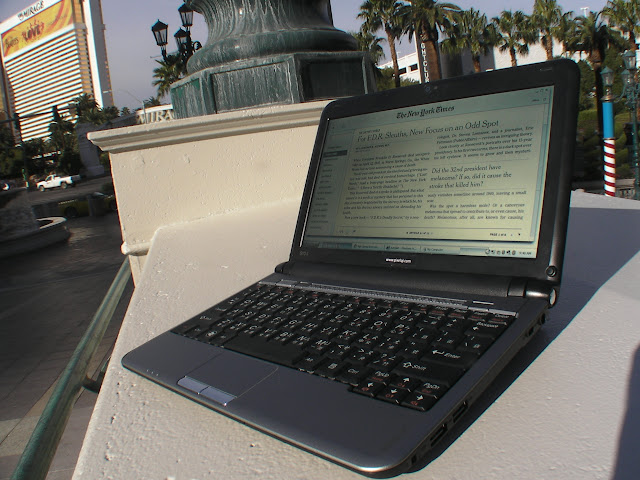
Related articles by Zemanta
- Pixel Qi Displays – the Future of e-Readers and Netbooks? (jkontherun.com)
![Reblog this post [with Zemanta]](http://img.zemanta.com/reblog_e.png?x-id=ff50e5a2-98c0-45d7-ab8f-9ecf6e32de5e)

- Image via Wikipedia

I will be in Las Vegas to film up to 50 HD quality videos from January 4th to 11th of the best ARM Powered® devices to be shown at the tradeshow. I will try to film behind-the-scenes Interviews with Engineers, Product Managers and other experts in the ARM Powered® Tablets, Mobile Phones and Laptops that are going to be shown at CES and launched hopefully soon thereafter at attractive prices.
The big question for me will be to notice the actual performance level reached by those latest ARM Cortex A8 or ARM Cortex A9 processors to be embedded in those devices. The certain crucial performance levels that we need to see working smoothly and fine are following:
– The web browser needs to browse on websites fast and with multiple amounts of opened tabs.
– The web browser needs to load advanced Javascripts and AJAX based websites just as fast as on an Intel-based Laptop.
– Flash 10.1 support needs to be just about as smooth and good on ARM Powered® devices as on Intel-based ones.
– I’d really like to see the first demos of fast and smooth Google Chromium OS demos running on ARM Powered® Laptops and Tablets. The full Google Chrome browser optimized to use hardware acceleration of the ARM Powered® Laptops and Tablets is crucial for the success of the platform. That is, it would be surely great to see Firefox and Opera browsers also working fast and smooth for all those advanced things.
– Some level of advanced 3D hardware acceleration for 3D game platforms such as the Unreal Engine, Quake3 demos, even N64 emulators demonstrated to work on all the latest ARM Cortex based technologies would be really great and would add a certain level of confidence in ARM Powered® devices from the bunch of 3D gamer geeks that do represent a large part of the blogosphere.
– In general, it would be extremely great to see working implementations of full hardware acceleration in Android and Chrome OS, as well as in Ubuntu 9.10 and any other Linux ARM based OS that can really be used well to optimize the use of hardware acceleration.
Then in terms of business models, ARM Powered® devices should have more opportunity to be sold to consumers at attractive prices. Subsidizing the devices with telecom contracts running up to more than $2000 over the 2-years is one way to do it. What I would really like to see are official announcements that the ARM Powered® Laptops and Tablets are not only very powerful in terms of Javascripts/Flash/3D performance, but also that they can be sold significantly cheaper to the end consumer than devices based on Intel.
The $200 ARM Powered® Laptop and the promise of $100 ones for consumers to buy totally unlocked and without contracts, that is where the biggest opportunity lies with ARM Powered® devices in my opinion. By bring the PC/Laptop industry to a lower cost level, could also mean that 1 Billion or more people around the world will be able to afford to have full access to the web. And if all those devices can add the Pixel Qi low power sunlight readable screen and even function in Tablet mode, run 20-40 hours on a low cost and light battery, then all the greatest. It would be really nice to see actual product announcements at CES in just a few days.
Related articles by Zemanta
- My CES Wish List (technologizer.com)
- Motorola: 2 New Phones At CES? (Eric Savitz/Tech Trader Daily) (techmeme.com)
- CES 2010: A Special Programming Note [Ces 2010] (kotaku.com)
![Reblog this post [with Zemanta]](http://img.zemanta.com/reblog_e.png?x-id=38ce39c8-c4a3-4b69-ba1a-e1fab4203bf0)

Imagine an ARM Powered Tablet computer with the 10.1″ Pixel Qi screen, where the screen uses plastics instead of glass to be very resistive. Imagine low enough battery usage in transflective mode to power the device for 40 hours even though the less than 1cm in thickness of the Tablet does not allow for much space for the batteries. Imagine a fully optimized use of the Pixel Qi screens reflective abilities where the screen only needs to refresh at the speed of 1hz when in e-reader mode when nothing moves on the screen, with the processor and motherboard also completely shut off and standby to save power when they are not required. But where screen refresh rate and the processor and motherboard can instantly be turned on as soon as they are needed again.
Imagine wireless data technologies based on White Spaces, for free unlimited wireless broadband on the 700mhz spectrum, WiFi Mesh networking and maybe even low power Bluetooth built-in.

Imagine a touch screen technology which would allow for very responsive touchscreen interfaces to accommodate reading, web browsing, typing and playing of games. Yet where the touch screen functions on a plastic screen that is scratch resistant.

All that for $75 and to be released within two years. Those are the latest plans from the OLPC organization, the same people that invented the Netbook industry as I wrote in http://www.olpcnews.com/commentary/impact/olpc_netbook_impact_on_laptop.html

Related articles by Zemanta
- OLPC shakeup: dual-screen XO-2 out, ARM-based XO 1.75 in (engadget.com)
- Notion Ink Enters Tablet Wars With Android Device [Tablets] (gizmodo.com)
- 7-Inch ICD Ultra Tablet Looks Like A Digital Photo Frame, But I’d Still Touch It [Tablets] (gizmodo.com)
![Reblog this post [with Zemanta]](http://img.zemanta.com/reblog_e.png?x-id=eb371daf-cfb0-4d25-95d5-e254a57078b9)

Source: slashgear.com
Related articles by Zemanta
- The Notion Ink Smartpad better be real (crunchgear.com)
- Tegra 2 Coming in January: Nvidia Promises Netbooks, Smartphones and Smartbooks Galore [Nvidia] (gizmodo.com)
- Notion Ink Enters Tablet Wars With Android Device [Tablets] (gizmodo.com)
- Archos 9 tablet PC just now available for pre-order at $550 (crunchgear.com)
- Archos punts 9-inch Windows 7 tablet PC (theregister.co.uk)
![Reblog this post [with Zemanta]](http://img.zemanta.com/reblog_e.png?x-id=23aaa200-5340-4051-b3fa-61269c9bd498)
Since I filmed such a great video of it at IFA, OPTIMA TECHNOLOGY(SHENZHEN)CO.,LTD sent me a review sample of their new Optima OP5-E for me to publish an exclusive hands-on video-review. The new Optima OP5-E Maemo Linux based MID is now being released by http://www.chinaoptima.com/ and China Telecom on the Chinese market and they are now looking for global distributors (if many people demand it, there may be a distributor bringing this device to your local 3G telecoms market or sell it unlocked). (contact [email protected] if you might be interested in ordering 300 units or more).
Maemo is the biggest potential alternative to Android Linux OS for embedded devices, mobile internet devices, pocket computers or phones, however you want to call them. This Optima OP5-E is the worlds first Maemo device that is not manufactured by Nokia. This makes the Optima OP5-E a product to check out for people who want to see how Maemo could make a commercial impact outside of Nokia in the open-source embedded device market.
It has a 4.3″ 800×480 resistive touch screen (capacitative at that size and price does not yet exist), 806mhz Marvell PXA310+ ARM processor, 128MB RAM, built-in 3G CDMA sim card reader (HSDPA version coming next month), built-in GPS, built-in Bluetooth, a high capacity exchangeable 2600mAh battery. All that comes for around $500 unlocked and could be sold at $300 or lower subsidized with a subscription plan from the carrier. It can support either VOIP and IM or regular voice and sms, that is up to the carrier how they want to integrate that feature.
The really cool things about this product are following:
– It has a built-in 3G CDMA modem with sim card reader.
– It has a pretty long battery life with a high capacity removable battery (I got a second battery to swap just in case I need more than 8 hours or more battery life for video playback)
– This type of device could function as a VOIP phone on 3G and WiFi networks (if the carriers agree to it and don’t apply packet shaping mechanisms to block VOIP usage on the 3G networks)
– Maemo may have quite a lot of dedicated open-source programmers already hanging out in the http://maemo.org/community/maemo-developers/ and who may have developed some pretty interesting Maemo based applications already (which I am going to check out and publish another video when I have found out which would be the best applications that work on this device and how much porting may be required to eventually adapt software that is already developed for the Nokia Maemo Linux tablets).
– It comes with a larger touch screen than on the existing range of Smartphones, significantly larger than the Nokia N900 screen, yet this product can be sold cheaper than all those smaller smartphones. I think that a larger 800×480 medium density screen is very valuable and I think that all those 3.5″ smartphones on the market have too small of a screen for Internet browsing and video playback use.
Things that I think Optima and eventually the open-source developers may improve on this device (based on my initial tests):
– The whole Maemo Linux user interfaces I think could use some optimizations and fine tuning, this device does support firmware updates, I don’t know how often Optima may release firmware updates for it to improve on all these things.
– The Firefox Fennec browser that is included, might not be as smooth and fast as the Webkit based browser that one can find on Android, the Palm Pre and the iPhone. Though, my guess is that it should be possible to port a version of a Webkit based browser to Maemo (if it hasn’t been done already), and I am sure this browser could be optimized and improved in firmware updates.
– Obviously, I would like to have HSDPA instead of CDMA 3G modem in this, to have i work here in Europe, Optima has told me that the HSDPA version will be released in about a month from now (maybe a bit later, I guess it may depend how soon interested importers from Europe and other HSDPA markets demand for it to be made available)
– I can’t seem to be able to connect my Bluetooth foldable Stowaway keyboard, I don’t know if Bluetooth headsets may be supported. I am sure, this could be fixed or improved in firmware updates. I don’t know if it supports Bluetooth tethering to access the Internet through a mobile phone that has that functionality. My guess is Bluetooth tethering is not supported yet since the 3G modem is integrated.
– It does not seem to have a TV output (unless somehow that functionality exists within the mini-jack output, but I guess it’s not there). Too bad, cause I enjoy watching DivX videos outputted from such a device onto a TV. Though, most existing smartphones on the market such as blackberry, palm pre and the iphone don’t have that feature either.
My pictures of it on Picasa:
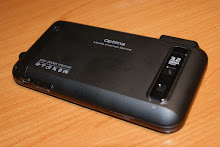
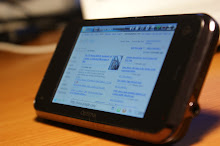
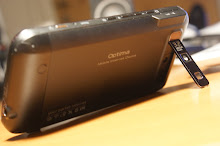
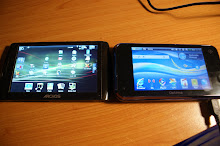
You can discuss this product in the dedicated forum section for it at http://forum.armdevices.net/viewforum.php?f=5
Here are the full official specs and press pictures:
|
|
|
|
Product Value Proposition |
|
|
True 3G Mobile Internet capability:China Telecom EV-DO 3G network, 3G and WiFi Internet complement each other, truly high-speed mobile broadband |
|
|
Real Internet Visualization:800×480 resolution, 4.3 inches touch screen, high-definition flat screen that maximizes visual liberation. Visit the website full-screen, high-definition movie player |
|
|
Input Experience,Multi Input Mode:Soft keyboard mode, hands typing. Support Pinyin input, full-screen handwriting |
|
|
Full-Featured Web Browser: The latest full-function built-in Firefox browser, Gmail type of Webmail, Web forums, Flash animation, youtube, etc. |
|
|
Complete Phone Functions:Support complete mobile phone functions, phone calls, send text messages, etc. |
|
|
Internet Access:WiFi, EVDO, and other multiple access methods to enable your mobile internet anytime, anywhere |
|
|
Rich Internet Applications:QQ, MSN, VOIP, online music, video, OFFICE, network TV and so on |
|
|
Lasting Usage Time:Built-in 2600mAh battery that allows long lasting usage time |
|
|
Large-screen GPS Navigation: Built-in up-to-date electronic maps for easy navigation |

|
System Specification |
||||||||
|
Type |
Details |
Description |
Remarks |
|||||
|
Product Dimension |
Form |
Straight |
|
|||||
|
Size |
Length 143mm Width 74mm Height 17.6mm |
|
||||||
|
LCD |
Screen Size |
4.3inch |
|
|||||
|
Screen Resolution |
800×480 WVGA |
16:9 widescreen |
||||||
|
Screen color |
1600 million colors |
|
||||||
|
Touch Module |
Flat Touch Screen |
Static Free |
||||||
|
Camera |
Network Camera |
300,000 pixels |
Only for video comm. |
|||||
|
Main Camera |
3,200,000 pixels |
|
||||||
|
Battery |
Type |
Polymer Lithium-Ion Battery |
|
|||||
|
Capacity |
2600mAh |
|
||||||
|
Button |
Top |
Full-screen button,Vol+,Vol-,Power Button、Camera Key |
|
|||||
|
Front |
None |
Simple flat-screen design |
||||||
|
Stylus |
Type |
Built-in/Included |
|
|||||
|
Body Support |
Type |
Back support |
|
|||||
|
Reset Hole |
Type |
Hidden |
Restart Function |
|||||
|
System Hardware Configuration |
||||||||
|
Hardware Platform |
Type |
Marvell PXA320+CDMA2000 1X EV-DO |
|
|||||
|
CPU |
Type |
Marvell PXA310 |
|
|||||
|
Speed |
806MHz |
|
||||||
|
RAM |
Capacity |
128MB DDR |
|
|||||
|
ROM Flash |
Capacity |
256MB Nand Flash |
|
|||||
|
WiFi |
Standard |
802.11b/g |
WIFI,Bluetooth Combination |
|||||
|
Bluetooth |
Type |
Bluetooth 2.0 |
Bluetooth Stereo Music Bluetooth Headset Call |
|||||
|
Communication System |
Type |
CDMA2000 1X EV-DO |
|
|||||
|
Band |
800MHz |
|
||||||
|
GPS Module |
Type |
Built-in GPS Chip |
|
|||||
|
Antenna |
GPS Active Antenna |
|
||||||
|
Speaker |
Size |
Single 14mmx20mm |
Elliptic |
|||||
|
Handset |
Size |
18mmx13mm |
Speaker Receiver 2-in-1 type,Elliptic |
|||||
|
Microphone |
|
Yes |
|
|||||
|
Vibration Mode |
|
Yes |
|
|||||
|
Indicator Light |
Amount |
Red x1 Blue x1 |
Red for Charging Blue for Network Signal |
|||||
|
Direction Sensor |
Amount |
None |
|
|
||||
|
External Interface Configuration |
||||||||
|
Memory Card |
External Storage |
External push T Card |
Maxemum Support 16GB |
|||||
|
SIM Slot |
Built-in Card Connector |
One |
Cap-style Buckle |
|||||
|
Interface Configuration |
|
MiniUSB |
Data Transmission |
Supported |
||||
|
USB Charge |
Supported |
|||||||
|
Headset Interface |
|
3.5mm Standard Headset Interface |
Music Output |
Supported |
||||
|
Phone |
Supported |
|||||||
|
Internet Connection |
|||
|
Type |
Details |
Description |
Remarks |
|
WIFI Connection |
|
Wireless WIFI Connection to Internet |
|
|
EV-DO Connection |
|
Via EV-DO Connection to Internet |
|
|
Bluetooth Phone |
|
None |
|
|
Necessary Accessories |
||||
|
Type |
Details |
Description |
Remarks |
|
|
3.5-inch Headphone Jack |
|
Wired (to hang up calls) headset |
Can be used to answer & hangup call |
|
|
Charger |
|
USB 2-in-1 type of Data line charger |
Rechargeable Battery Charger |
Supported |
|
USB Data In-line Charge |
Supported |
|||
|
USB Data Line |
|
1 (integrated in charger) |
Charging Computer, Recognize storage devices MID |
|
|
Software Configuration |
|||
|
Type |
Details |
Description |
Remarks |
|
System Configuration |
OS |
Linux Maemo |
|
|
Language |
Simplified Mandarin,English |
|
|
|
Inputting Method |
English Letters,Pinyin,Full-screen Handwriting、Handwritten (double box) input method |
Handwritten (double box) pending on selection |
|
|
Theme |
2 Built-in Theme |
|
|
|
Desktop Widget |
|
Google Search |
|
|
|
Network Clock |
|
|
|
|
Local IP Query |
|
|
|
|
Desktop shortcut |
|
|
|
|
|
Web shortcut |
|
|
|
Profile |
|
|
|
Internet Browser |
|
Firefox Browser |
Full-featured Browser |
|
IM Communication Software |
|
MSN |
|
|
|
QQ(Beta) |
|
|
|
|
Flying Mail(Beta) |
|
|
|
Internet Telephony |
|
VOIP(TBD) |
Support Voice, Video Calls |
|
Multimedia Software |
|
Media player |
Supported Audio Formats: wma,mp3,wav,aac Video Supported Formats: avi,mp4,3gp |
|
Communication |
Call |
Voice Calls |
Note: The first version of the software only supports the data access functionality, upgrade to support the integrity of the follow-up calls and messaging |
|
Phone Book |
|||
|
Call Record |
|||
|
Personal favorites |
|||
|
Information |
Text Messaging |
||
|
SMS Collection Record |
|||
|
Personalized |
来电大头贴 (Cut and Paste?) |
||
|
Contact Image/Profiling |
|||
|
Custom Ringtones |
|||
|
Application Software |
|
OFFICE |
Word Excel PPT (Read-only) |
|
|
PDF Reader |
|
|
|
|
Electronic Dictionary |
|
|
|
|
GPS Navigation Map |
|
|
|
|
Camera |
|
|
|
|
Photography |
Follow-on Upgrade |
|
|
|
Network TV (Beta) |
|
|
|
|
Photo Browser |
|
|
|
|
E-book(FBreader) |
Support fb2、HTML、CHM、RTF、Plain text |
|
|
|
Stock trading |
Currently does not support online trading |
|
|
Useful Programs |
|
Notepad |
|
|
|
Calculator |
|
|
|
|
Weather Query |
|
|
|
|
Flight Inquiry |
|
|
|
|
Map Query |
|
|
|
|
Drawing Board |
|
|
|
|
Application Management (local program management and software Download Center) |
Real-time Software Download |
|
|
|
Resource Manager |
|
|
|
|
Control Panel |
|
|
|
Built-in Games |
|
Crazy Parking |
|
|
|
Connecting Ball |
|
|
|
|
Tetris |
|
|
|
|
Solitaire |
|
|
External Device Support |
Support USB OTG |
USB HOST |
External hard disk support, CMMB’s network adapter plug-in devices |
|
USB Mouse |
via USB Connector |
||
|
USB Keyboard |
via USB Connector |
||
|
U Disk |
via USB Connector |
||
|
|
Bluetooth Dialer |
|
|
|
|
Bluetooth Stereo Headset |
|
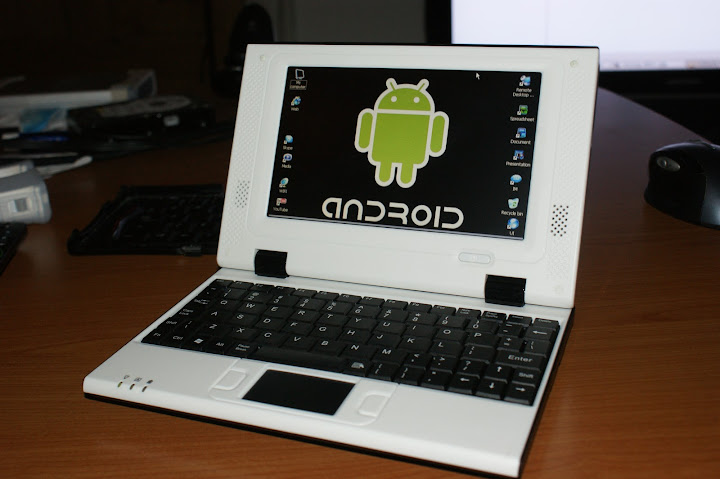
Here is the cheapest laptop in the world. It can run Android since it is based on a Samsung ARM926EJ-S3C2450 processor, but for now this review unit that I am reviewing in this video only runs Windows CE 5.0. Check back hopefully within a month for another video when Menq may have sent me a firmware upgrade to use Android instead of Windows CE.
As I filmed the Menq Easypc E760 last year at IFA, Menq is a chinese company interested in providing the worlds cheapest laptop designs. Last year, they were using a 480×320 resolution 7-inch screen to reach the $89 price point for laptops, now they are able to include a 800×480 resolution 7-inch screen. Find more information about this Menq EasyPC E790 at http://www.menqgroup.com/products/pro/E790.asp
The coming of the ARM based laptops, in my opinion, are indicative of the real revolution that is imminent for the Laptop and Desktop computer industry. As soon as ARM based laptops can run a full Chrome Browser, with unlimited amounts of opened tabs all running smoothly, with Flash support, full Javascripts support and basic multimedia functions, then I think the turning point will be reached where most consumers in the world, and especially in developing countries, will be buying only the cheapest laptops.
Web Browsing is all that most people need, with clever HTML5 enabled Chrome browser running on any type of Embedded OS, be it Android or Ubuntu, even offline application could be run reliably from within the browser engine. Anything most people really need will work.
As you can see in my video review, this Menq EasyPC E790 is kind of slow since it is based on the ARM9 processor technology. For not much more cost, though, the Chinese laptop manufacturers could soon be using the ARM Cortex A8 processor technology, which should provide for a 5-10 times faster web browsing experience, and even faster if using an upcoming ARM optimized Chrome browser.
This laptop, I think, is giving us a taste of the future of laptops. Soon all laptops will cost $80 or less, run 10 hours or more on a small and cheap 3-cell battery, even over 20 hour battery life if using the Pixel Qi screen technology. It is also providing a sensation for the what we can expect from the next generation OLPC One Laptop Per Child XO-1.75 to be released by OLPC with ARM processor technology inside instead of X86.
If using ARM9, OLPC could definitely sell laptops at below $80, but maybe ARM Cortex A8 will be preferable at around $10-$20 extra in manufacturing costs, and the innovative new Pixel Qi screen, WiFi meshing, more RAM and storage, could bring the next ARM based OLPC XO-1.75 laptop coser to $125 per laptop, to reach below $100 with mass production. In any ways, I am really looking forward to see the upcoming releases of the ARM Cortex A8 based laptops, yet still, this ARM9 based laptop is very interesting, and if you want your local supermarket to start selling them, I suggest you phone your local supermarket headquarters, and ask them to contact Menq and order for example 5000 pieces or more so they can get them at the price of $80 per unit and sell it to you for probably below $100 in supermarkets.
Pictures of this laptop:
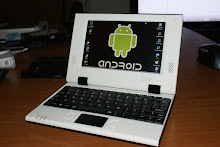

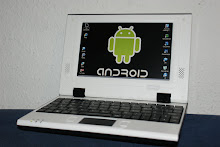

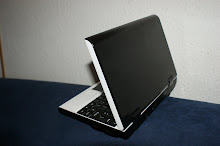
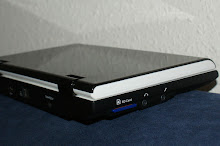
Find more information at http://www.menqgroup.com/products/pro/E790.asp
Blog about the cheap Alpha-400 laptops http://www.alpha-400.com/
Here are some of my previous famous videos of this type of cheap ARM based revolutionary laptops:
September 3rd 2009: Sharp PC-Z1, the first Freescale ARM Cortex A8 based smartbook on the market
June 7th 2009: $150 Freescale ARM Cortex A8 based Pegatron Desktop
June 5th 2009: ARM talks about the new ARM Laptops
June 5th 2009: Qualcomm talks about Snapdragon powered ARM laptops
June 5th 2009: Freescale shows smartbooks
June 4th 2009: Worlds first Android laptop, Qualcom snapdragon powered by Compal
June 4th 2009: Nvidia Tegra talks about Flash support and HD multimedia ARM laptops
June 4th 2009: Nvidia talks more about their new ARM laptops
September 12th 2008: Menq $89 EasyPC E760
September 2nd 2008: The $98 Hivision Mininote
September 1st 2008: Univ $150 ARM laptop
March 12th 2008: GeCube ARM laptop
March 12th 2006: Municator $146 desktop
Why it’s the best: (better than ipod touch, zune HD and other Android smartphones)
– The screen is 2x larger at 4.8″ vs. 3.5″
– The screen resolution is 2.5x higher at 800×480 vs. 480×320
– The processor is 3-4 times faster with ARM Cortex A8 vs. ARM11 (the new ipod touch released last month does have ARM Cortex A8 as well though)
– It plays back every video codecs, including DivX, XviD, WMV, Mpeg2, VOB, H264, MP4, MOV, MKV up to 1280×720 and audio codecs Mp3, Flac, Ogg Vorbis, AAC, AC3 and WMA. Even RMVB might be supported (I have not tested RMVB yet)
– This device can stream Youtube HD and any other HD video format directly from the web over WiFi-N. It’s basically also a 180gr $200 (street price for 8GB version) full Blu-ray replacement. On the 500GB version (soon $400 street price), you can basically walk around with 120 Blu-ray quality movies in your pocket to connect and play on any HDTV using the HDMI Mini Dock.
– Archos comes with up to 500GB built-in storage for the hard drive based models.
– MicroSD card slot on the Flash based models.
– HDMI output through the HDMI Mini Dock (price not known yet) or the DVR Station ($130 or lower)
– USB and Bluetooth keyboards and mice are supported
– WiFi-N provides more bandwidth and broader coverage for connecting to WiFi Internet
– 3G Bluetooth tethering through a mobile phone for Internet when you are outside of reach of WiFi hotspots
– Video-recording and scheduling with electronic program guide like a Tivo (with the optional DVR Station $130 or below)
– Real GPS built-in for Archos provided Android GPS application or for any other Android based GPS and location based applications
– FM receiver and transmitter built-in
– Samba and UPNP file sharing for streaming of HD movies and TV shows on your local network (I have not tested this feature yet, I am waiting for my Fonera 2.0n to arrive hopefully next week)
– 1280×720 Android Desktop experience when outputting the screen to a HDTV using HDMI. This is the worlds first 1280×720 Android experience. Apps could be optimized for this in the coming months, for example I am expecting to see the full high resolution compatible and optimized Google Chrome available for ARM Cortex A8 based Android devices in the coming few months.
– All that, and it still fits in a pocket, it does not cost more than the ipod touch or zune HD, it is much cheaper than the currently available HTC and Samsung Android phones (at least when bought unlocked) and it is only 1.5x heavier than the ipod touch.
The Archos 5 Internet Tablet with Android is, I think, the most significant alternative to Apple’s and Microsoft’s portable multimedia consumer electronics products on the market for real tech geeks. In my opinion, Archos already has released the industry’s best ipod touch and zune HD killer with what we have now. Even though I do look forward to them improving a few things in firmware updates to come in the next weeks and months.
What Archos can improve in the next firmware updates:
– They should fix the audio-synch issue with H264 720p HD video files such as MKV HD and Youtube HD playback. I am confident Archos can fix this in on of the soon to come firmware updates. Mostly the audio-synch issue I am experiencing is only very slightly noticable and the TV episodes as still very watchable and look fantastic using HDMI output from Archos 5 Internet Tablet to my 42″ HDTV.
– They should try to support more than 3500kbit/s MKV high profile h264 720p so that MKV 720p 4GB+ movies will play smoothly and that MKV 720p TV episodes will not sometimes drop some frames (usually for 1-3 seconds) on the high peak bitrate scenes (see my tests of MKV high profile h264 720p playback in this forum thread http://forum.archosfans.com/viewtopic.php?f=47&t=26603)
– Hopefully Archos can add support for the DTS audio codec, which is often used in 4GB+ MKV 720p movies.
– USB Webcams or Headmounted camera for live video broadcasting applications like Ustream and Qik.
– USB 3G Dongles would be really useful even though carrying and connecting the USB 3G dongle to a Mini Dock, HDMI Mini Dock or Battery Dock is not the most compact of setups.
– Archos has promised Android 1.6, Android 2.0 and Flash 10.1 support in updates. It’d be nice to see all these officially add support for all the Google apps such as Gmail client, Google Maps, Google Contacts, Google Listen and the Google Marketplace for apps, considering it should be possible for Google to just filter the apps for Archos’s specific screen resolution and also filter out apps that require the Camcorder and the electronic compass, unless Archos does provide a Dock or USB webcam and headmounted camera add-on support that ads support for those features.
– It will be interesting to see if Archos specific hardware advantages will be taken advantage of by third party Android application developers. For example, it will be interesting to see if third party developers will be able to provide some apps that support HD video streaming, peer-to-peer downloading and streaming, video games emulation up to N64 and Dreamcast, advanced 3D games such as Quake3, and many other such really advanced things.
– It is going to be interesting to see also up to what extent Archos, Google and third party developers can take advantage of the 1280×720 output when using the HDMI output to a HDTV. I would like to be able to use my Archos 5 Internet Tablet with Android as a full Desktop/Laptop replacement. That is, if the ARM Cortex A8 platform inside of it and with all the hardware acceleration can be powerful enough to provide me with the complete performance that I need for full screen, full keyboard and mouse computing.
If they can quickly improve the firmware with these improvements and added features, I believe the Archos Android Tablet could become the absolute must have product for all geeks.
Discuss this video:
You can discuss this video review in the forum http://forum.archosfans.com/viewtopic.php?f=47&t=26754
In my next videos:
In my next videos that I will post here during the next few days, I plan to show you 3G Bluetooth tethering, Youtube HD playback (which now works in todays new Firmware update 1.2.03), some awesome Android apps that work, Bluetooth keyboard and mouse fun, remote desktop, local and remote file sharing and streaming and many more awesome features.
Some pictures:
I posted some high resolution pictures of it comparing it to things you might know the size of (click on the images to see them in full size on Google Picasa):
The next hardware:
For the next Archos Phone range due to be released or shown at CES in January 2010, I wish for Archos to integrate a Pixel Qi 3Qi Capacitative touchscreen (watch my video from Computex http://techvideoblog.com/computex/pixel-qi-screen-demo-live-from-taipei/), a 720p camcorder and an electronic compass together with the 3G HSDPA sim card modem. Archos is getting to be very close to absolute perfection in mobile computing.
Full disclosure:
Full disclosure: I am the biggest Archos fanboy in the world. I run the worlds biggest Archos fans community here at http://archosfans.com and at http://forum.archosfans.com and have done so for the past 5 years. Archos did send me this new Archos 5 Internet Tablet with Android 4 days ago for free and have told me that I could keep it since I also need it to support the thousands of Archos users in my online community.
]]>You will get £100 Google OS Laptops, running 15-20 hours on a 3-cell battery, fully sunlight readable with the Pixel Qi screen, highly optimized with built-in HSDPA always-on connectivity, connected standby features (rings or blinks an alert light from full standby on incoming emails or calendar alerts), all Google OS laptops will be based on ARM Processors.
Basically Chrome OS = Android 2.0 optimized for Laptops. It will absolutely take over the world, as the absolute best OS for ARM Laptops, instantly putting Microsoft, Apple and Intel out of business.
I posted this as a comment on http://www.theregister.co.uk/2009/07/15/google_chrome_os/comments/
]]>Also watch my other Pixel Qi videos:
http://138.2.152.197/2009/06/02/pixel-qi-screen-demo-live-from-taipei/
http://138.2.152.197/2009/06/07/pixel-qi-vs-kindle-vs-toshiba-r600-vs-regular-lcd-tablet/
http://138.2.152.197/2009/06/07/mary-lou-jepsen-answers-user-comments/
This is a demonstration from the first batch of the first working prototypes of this screen, and as you can see, it already looks amazing. Mass production of these screens are planned to be launched soon and should be available in any netbook (and later other devices such as smartphones) as long as the manufacturers decide that they want to integrate it in their products.
Find more informations about this screen at http://pixelqi.com
You can click on the pictures to see them in full 5 megapixel qualities:


There is a basic reason AMD is not too enthusiastic about this whole new low cost laptop market. The reason is written on the wall, everyones can see it coming, cheaper laptops means it will be much harder to find profits in the industry. AMD isn’t exactly having an easy time already as things are today, Intel’s profit margins and overall income have shrinked 90% in 2008 compared to 2007.
I believe OLPC should use Google Android with Sugar on top, and they should increasingly rely on cloud computing such as the recently rumored Google Web Drive service to store and share all the data on. With XO-2, you should much further synchronize the way the school servers synch storage, processing power and contents to and from the cloud. Basically what you get is an overly simplified Internet access terminal, one with a small ARM Cortex processor behind the next generation of even lower power and lower cost Pixel Qi screens. One that just relies on basic Google Gears for local content caching, and let most of the rest happen using the much cheaper cloud.
$100 laptops using ARM are possible today already. Chinese GPS manufacturers are making them already using uber simple Linux and last generation MIPS or ARM processors: http://techvideoblog.com/category/laptops/
This makes it obvious that OLPC can achieve a $75 price point on XO-2, consider also the advantage of using a dual touch-screen, is that ou can even more easilly mass manufacture exactly the same model for the whole world. Since all the different keyboard layouts and all of the local interfaces are simply going to be a software function of the touchscreens. Mary-Lou Jepsen has done it once already. She can do it again.
]]>